
BDA’s Jeff Acton quoted in Bloomberg on emerging bidding wars in Japan’s M&A Market
A new trend is emerging in Japan’s busy M&A market, a place that’s traditionally seen a friendlier approach to doing business — bidding wars.
This week brought the latest example, as Sweden’s EQT tabled a higher offer for online marketplace Kakaku.com in a effort to see off rival suitors Bain Capital and SoftBank-backed LY. For Bain, it’s the second bid battle in Japan in 18 months, with the firm having lost out to KKR in the $4 billion-plus pursuit of Fuji Soft last year.
“What we’re seeing with Fuji Soft and Kakaku.com is not a one-off — it’s the new shape of the Japanese market,” says Takeshi Nakao, managing partner for Japan at Freshfields. “As more private equity players build out platforms and compete for the same pool of take-private targets, bidding wars will become a more regular feature of the landscape.”
Japan updated its M&A guidelines in 2023 to help promote takeovers and boost competitiveness, and that move has fundamentally changed the calculus for corporate boards, according to Jeff Acton, a partner and co-head of Tokyo at investment bank BDA.
“They’re now duty-bound to seek out the highest offer, not just accept the first friendly bid,” he says. “That shift, combined with a more open stance toward unsolicited bids, has created fertile ground for competing offers on public deals.”
Those tweaks to the M&A guidelines came with a focus on best practices for responding to unsolicited offers. Since then, we’ve seen some bold moves from foreign buyers looking into Japan — with some mixed results. Toyota this year ended a standoff with activist Elliott and reached a deal to privatize Toyota Industries in the biggest-ever acquisition of a Japanese firm. But in 2025, Canada’s Couche-Tard ditched a massive buyout of Seven & i after growing frustrated with management at the 7- Eleven owner.
“One notable shift is that hostile and unsolicited approaches are no longer exceptional events in Japan,” says Tom Barsha, Bank of America’s head of Asia Pacific M&A. “Boards are increasingly willing to evaluate unsolicited interest on its merits, creating a more competitive environment and an increased likelihood of contested situations.”
Not all deals in Japan are becoming contentious. This year has seen KKR offer to buy Taiyo in a $3.2 billion transaction; and Warburg Pincus launch a $1.2 billion tender offer for student housing and services firm JSB, in what would be its first take-private investment in the country.
All in, the value of deals involving Japanese companies sits at around $327 billion this year, Bloomberg-compiled data show. That’s up more than a fifth on the record-breaking 2025. The boom is pulling firms in. Advent opened a Tokyo office in January, 15 years after exiting the market, and Kirkland & Ellis, one of the world’s biggest law firms, has announced plans to open an office in the city.
“The medium-term outlook for Japan M&A remains strong,” says Barsha, who’s also BofA’s co-head of investment banking coverage for APAC. “Governance reforms, a greater focus on capital efficiency and ongoing portfolio rationalization by corporates continue to drive transaction activity.” —Manuel Baigorri
About BDA Partners
BDA Partners is the global investment banking advisor. BDA is a premium provider of advice to sophisticated clients globally, with 30 years’ experience advising on cross-border M&A, capital raising and financial restructuring. BDA provides global reach with teams in New York and London, and true regional depth through Asian offices in Mumbai, Singapore, Ho Chi Minh City, Hong Kong, Shanghai, Seoul and Tokyo. BDA has expertise in the Chemicals, Consumer & Retail, Health, Industrials, Services, Sustainability and Technology sectors. BDA works relentlessly to earn clients’ trust by delivering insightful advice and outstanding outcomes.
BDA Partners has strategic partnerships with William Blair, a premier global investment banking business, and with DBJ, Development Bank of Japan, a Japanese government-owned bank with US$150bn of assets. US securities transactions are performed by BDA Partners’ affiliate, BDA Advisors Inc, a broker-dealer registered with the SEC. BDA Advisors Inc is a member of FINRA and SIPC. In the UK, BDA Partners is authorised and regulated by the FCA. In Hong Kong, BDA Partners (HK) Ltd is licensed and regulated by the SFC to conduct Type 1 and Type 4 regulated activities to professional investors. bdapartners.com
Vietnam’s consumer sector remains one of the first places investors look in Southeast Asia. The fundamentals still hold: a population of over 100 million, a median age around 34, and a middle class with real spending power.
Yet, the past two years have told a quieter story. Merger and acquisition activity has slowed noticeably, with barely any large-cap transactions. In this dealmaking environment, investors are no longer buying growth alone. They are paying for fundamentals that can hold up across different economic cycles: distribution reach, brand trust, and the scalability and synergies a deal can unlock. That shift is itself a sign of a market growing up.
The slowdown had three main causes. Firstly, is cautious consumer behaviour with tightened spending and lifted savings, prioritising essential goods over discretionary purchases. Softer business performance stalled many processes before they even began.
Secondly, new US trade measures in 2025 clouded the outlook for export-linked demand and soured investor sentiment across the region. Many buyers adopted a wait-and-see approach.
Thirdly, sellers anchored to pre-slowdown expectations, while buyers priced in the new reality. Several good businesses ran processes that went nowhere, not for lack of quality, but for lack of agreement on price.
The deals that did close share a clear theme. Buyers started valuing resilience besides growth. Distribution reach and brand trust became the prize.
Momogi did not simply buy a confectionery brand in Bibica. It bought decades of distribution, reaching deep into the general trade outlets where most Vietnamese still shop. Similarly, Skinetiq’s value to Marico lies in its e-commerce and social commerce infrastructure, years of investment a traditional fast-moving consumer goods player would otherwise need to build in-house.
Besides market reach, brand quality also matters. Thien Long, Bibica, Haiha-Kotobuki, and Vinamilk are established category leaders that earned their position over decades. Vietnamese consumers are also growing more selective about which brands they trust, so buyers are increasingly paying for confidence, not just shelf access.
According to Cimigo, modern trade has climbed towards a third of retail sales in 2025, e-commerce now adds over 10 per cent, and traditional trade is shrinking for the first time. As the channel dynamic shifts and the economy stays cautious, distribution visibility and a strong brand create resilience. Both take years to earn and cannot be leased quickly.
On top of that, valuation premium is driven by scalability and synergy. A buyer who can scale an acquired asset will pay up for reach it would otherwise take years to build. The premium grows further when a buyer can also push its own products through the same network at little added cost.
Is momentum returning? Yes, but in a selective way. That confidence is reinforced by policy: the National Assembly has set an annual GDP growth target of at least 10 per cent in 2026-2030, alongside a retail sales growth target of 11 per cent, a clear government bet on stronger consumer demand ahead. Consumer preferences are shifting further towards quality and trusted brands, which makes well-positioned local names with deep market reach more attractive to foreign buyers.
Tighter tax enforcement is raising the bar for investible assets and improving market transparency. It stings general-trade-reliant small and medium-sized enterprises and household businesses with loose books, but is also an opportunity for them to formalise, benefiting the whole market.
The exit door is also widening to provide support for the momentum. The new 30-day listing process and FTSE market upgrade reopen a public route that had gone quiet before. That matters most to financial sponsors. A market with multiple viable exits gives sponsors more confidence to commit capital.
Ultimately, recovery is gaining real traction. Deals are being done with sharper intent by more sophisticated counterparties on both sides. Vietnam’s consumer merger market has not stalled. It has simply become more disciplined and selective.
Selected consumer sector deals, 2025-2026
| Date | Target name | Target segment | Buyer name | Buyer type | Deal type | Deal size ($m) |
| Jun 26 | Hai Ha-Kotobuki | Confectionery and bakery | One Capital | Strategic | Majority | 6.7 |
| Feb 26 | Chicken Plus Vietnam | Restaurant chain | The Ventures | Sponsor | Majority | N/A |
| Feb 26 | Skinetiq | Beauty and personal care | Marico | Strategic | Majority | 30.0 |
| Dec 25 | Nguyen Kim | Electronics retail | PICO Holdings | Strategic | Majority | 36.0 |
| Dec 25 | Mega Market [1] | Supermarket chain | Berli Jucker | Strategic | Majority | 714.9 |
| Dec 25 | Vinamilk | Dairy products | Fraser & Neave | Strategic | Minority | 228.2 |
| Dec 25 | Red Wok | Restaurant chain | Undisclosed buyer | N/A | Majority | N/A |
| Dec 25 | Thien Long Group | Office and school supplies | Kokuyo | Strategic | Majority | 185.0 |
| Nov 25 | Kome88 | Imported food retail and wholesale | Toho | Strategic | Majority | N/A |
| Nov 25 | Hoang Anh Flavors | Food flavouring and ingredients | T Hasegawa | Strategic | Majority | 27.6 |
| Oct 25 | Bibica | Confectionery and bakery | Momogi | Strategic | Majority | 64.0 |
| Sep 25 | Paris Baguette Vietnam | Coffee chain | Viet Thai International | Strategic | Majority | N/A |
| Aug 25 | Vihamark Group | Beverages | Aseed Holdings | Strategic | Minority | 3.4 |
| Jun 25 | Betrimex | Coconut products | TTC Agris | Strategic | Minority | 57.4 |
| May 25 | Aladdin | Restaurant chain | Excelsior Capital | Sponsor | Minority | N/A |
| May 25 | Every Half Coffee | Coffee chain | Openspace Ventures; DSG Consumer | Sponsor | Minority | 3.0 |
| May 25 | LC Foods | Processed food | Excelsior Capital | Sponsor | Minority | N/A |
| May 25 | Bien Hoa Consumer | Sugar and coconut products | UOB Venture Management | Sponsor | Minority | N/A |
| Mar 25 | Phuong Nam Bookstore | Bookstore chain | Thien Long Group | Strategic | Majority | 5.3 |
| Feb 25 | The Coffee House | Coffee chain | Golden Gate Group | Strategic | Majority | N/A |
[1] Note: The Berli Jucker/MM Mega Market Vietnam transaction was an intra-group restructuring.
About BDA Partners
BDA Partners is the global investment banking advisor. We’re a premium provider of advice to sophisticated clients globally, with 30 years’ experience advising on cross-border M&A, capital raising and financial restructuring. We provide global reach with our teams in New York and London, and true regional depth through our Asian offices in Mumbai, Singapore, Ho Chi Minh City, Hong Kong, Shanghai, Seoul and Tokyo. BDA has expertise in the Chemicals, Consumer & Retail, Health, Industrials, Services, Sustainability and Technology sectors. We work relentlessly to earn clients’ trust by delivering insightful advice and outstanding outcomes. BDA Partners has strategic partnerships with William Blair, a premier global investment banking business, and with DBJ, Development Bank of Japan, a Japanese government-owned bank with US$150bn of assets.
US securities transactions are performed by BDA Partners’ affiliate, BDA Advisors Inc, a broker-dealer registered with the SEC. BDA Advisors Inc is a member of FINRA and SIPC. In the UK, BDA Partners is authorised and regulated by the FCA. In Hong Kong, BDA Partners (HK) Ltd is licensed and regulated by the SFC to conduct Type 1 and Type 4 regulated activities to professional investors. bdapartners.com
For years, Vietnamʼs investment story has revolved around robust domestic consumption, favourable demographics and export-oriented manufacturing. As the country embarks on its most ambitious infrastructure programme in decades, a fourth pillar may be emerging—one that could fundamentally redirect private equity capital over the next decade.
Between 2026 and 2030, Vietnam plans to deploy roughly $310 billion in state capital across flagship projects including the North-South high-speed railway, Long Thanh International Airport, urban metro systems and expressway networks. The countryʼs infrastructure requirements could approach $600 billion by 2040, per various estimates.
While these projects are primarily state-led, investors believe their greatest multiplier effect will be seen in broader private sector opportunities.
The infrastructure push is already changing how industrial developers view Vietnamʼs next phase of growth. Lance Li, CEO of Warburg Pincus-backed BW Industrial, told DealStreetAsia in an interaction that the country is entering “a new industrial growth cycle, and infrastructure is one of its strongest long-term catalysts.”
“Beyond improving connectivity, these investments will lower logistics costs, improve supply chain efficiency and strengthen Vietnamʼs overall competitiveness as a manufacturing destination,” Li said
According to Phuoc Pham, Managing Director at BDA Partners, the infrastructure programme represents the beginning of a multi-decade investment cycle that extends far beyond roads, railways and airports. The buildout is expected to trigger successive waves of corporate growth as new transport corridors reshape manufacturing, logistics and industrial development.
“The State builds the corridor while private capital monetises what moves along it,” said Pham.
Each wave has a natural owner: the first belongs to technology and equipment partners alongside development finance institutions; the second to strategic operators and infrastructure funds in logistics and industrial assets; and the third to private equity funds backing the cash-flow businesses alongside the corridors.
Infrastructure pillar
VinaCapital argues that infrastructure should not be viewed as replacing Vietnamʼs traditional investment strengths but rather reinforcing them.
“Vietnamʼs growth drivers have traditionally rested on consumption, demographics, and manufacturing cost advantages. Infrastructure is now becoming a genuine fourth pillar—not replacing the old thesis but reinforcing and extending it,” said Khanh Vu, Portfolio Manager of VinaCapital Vietnam Opportunity Fund (VOF).
VinaCapital has been investing in several of these “home-grown” opportunities, including Gelex Infrastructure.
“Gelex Infrastructureʼs business includes large-scale infrastructure projects such as airports, energy and industrial parks, and we believe that they will grow to become one of the leading infrastructure companies in the country, an example of a national champion that the government is so keen on developing,” Vu added.
Pham of BDA Partners frames the infrastructure opportunity through three complementary themes.
First, the emergence of investable infrastructure assets capable of generating long-duration contracted cash flows. Second, large domestic conglomerates leading projects, and third is the beneficiary economy thesis where businesses benefit from improved infrastructure, particularly industrial, logistics, energy and digital infrastructure.
Following second-order winners
For many private equity firms, the most attractive opportunities may lie not with infrastructure ownership itself but with the companies whose economics improve riding on the infrastructure.
“We have made significant investments into companies like these over the last 12 months,” said Vu of VOF. “This is where we see the more compelling opportunity for investors; specifically, improved connectivity effectively unlocks new supply of investable, competitively positioned assets that did not necessarily function as attractive infrastructure plays before.
BW Industrial is already seeing that shift in tenant demand. According to Li, manufacturers are no longer selecting sites primarily based on labour availability or proximity to ports.
“Going forward, competitive advantage will come from connectivity, power reliability, and a well-developed operating ecosystem, rather than land availability alone,” he said.
Attractiveness to global investors
BDA Partners identifies industrial and logistics ecosystems as the strongest areas for private equity deployment.
Industrial and logistics ecosystems are the most vibrant segments in the market, spanning real estate (industrial parks, factories, warehousing, airports, seaports and logistics centers) and the utilities and services running through it (power, water, waste, 3PL, cold chain, last-mile, freight forwarding, aviation, shipping). Global sponsors have already validated the model at scale.
Pham of BDA Partners also identified power and digital infrastructure, and local conglomerates as two other areas that offer compelling returns through more nuanced pathways. Actisʼs Levanta platform recently added an operating Vietnamese wind asset to its regional portfolio, while local conglomerates stay on the radar of large funds seeking diversified exposure.
“KKR, Stonepeak, EQT and TPG have raised or are raising dedicated Asia-Pacific infrastructure vehicles, with Vietnam squarely inside their mandates. The question for the next multi-million (or multi-billion) PEled infrastructure deal is simply how quickly an opportunity arises,” Pham added.
Recent infra deals in Vietnam by investment funds
| Year | Investor(s) | Target | Sector | Transaction details |
| 2023 | Actis | An Phat 1 Industrial Park JV | Industrial infrastructure | Exited |
| 2023 | KV Asia Capital | Bee Logistics | Freight forwarding & logistics | KV Asia Capital invested in Bee Logistics |
| 2025 | VinaCapital Opportunities Fund (VOF) | Gelex Infrastructure | Energy, industrial parks, infrastructure | VOF was the only institutional investor to obtain a meaningful pre-IPO investment allocation in Gelex Infrastructure alongside company management. In February, the company listed on the Ho Chi Minh Stock Exchange with the ticker “GEL |
| 2025 | Ares Management | SLP (from GLP) | Logistics real estate | Acquired GLP’s Southeast Asia logistics platform, including Vietnam assets |
| 2025 | A.P. Moller Capital in partnership with Vina Capital | ALS Air Cargo Terminal | Air cargologistics | Strategic investment and partnership through second institutional fund, A.P. Moller Capital – Emerging Markets Infrastructure Fund II |
| 2026 | Levanta Renewables, Actisʼ pan-Southeast Asia renewable energy platform. | Wind project in Gia Lai Province, Vietnam. | Renewable energy | Acquired an 80% stake in a fully operational 50 MW onshore wind project in Gia Lai Province |
| 2026 | Undisclosed | BW Industrial | Industrial & logistics real estate | A $120 million partnership with a top global institutional investor to develop a portfolio of high-quality industrial projects across major industrial zones. |
| 2026 | Cool Japan Fund | CLK COLD STORAGE CO | Frozen warehouses in Vietnam | Exited. Cool Japan Fund, transferred all of its shares of CLK COLD STORAGE to Japan Logistic Systems Corp. and Kawasaki Kisen Kaisha |
Beyond industrial parks
The opportunity set may continue expanding as Vietnam moves further up the manufacturing value chain.
Recent investments by semiconductor manufacturers, chip designers and AI companies suggest that transition may already be underway. BDA Partners believes supply chains supporting semiconductor packaging, advanced manufacturing, technology-enabled logistics and workforce development could become increasingly attractive targets for private capital.
BW is already seeing demand shift toward these sectors.
“High-value-added industries account for nearly half of BWʼs total ready-built factory leased area, with the electronics sector representing the biggest tenant group. We also continue to see strong leasing demand from global manufacturers expanding or diversifying their operations into Vietnam,” Li said.
The larger question for private equity is therefore no longer whether Vietnamʼs infrastructure programme will generate investment opportunities but where those opportunities will appear first.
“Private capital may come in the businesses riding the value-added manufacturing upgrade rather than waiting for it to complete. Chip testing and packaging supply chains, workforce and education platforms, and tech-enabled logistics serving time-sensitive, high-value cargo should belong on fundsʼ radar,” Pham of BDA Partners added.
About BDA Partners
BDA Partners is the global investment banking advisor. We’re a premium provider of advice to sophisticated clients globally, with 30 years’ experience advising on cross-border M&A, capital raising and financial restructuring. We provide global reach with our teams in New York and London, and true regional depth through our Asian offices in Mumbai, Singapore, Ho Chi Minh City, Hong Kong, Shanghai, Seoul and Tokyo. BDA has expertise in the Chemicals, Consumer & Retail, Health, Industrials, Services, Sustainability and Technology sectors. We work relentlessly to earn clients’ trust by delivering insightful advice and outstanding outcomes. BDA Partners has strategic partnerships with William Blair, a premier global investment banking business, and with DBJ, Development Bank of Japan, a Japanese government-owned bank with US$150bn of assets.
US securities transactions are performed by BDA Partners’ affiliate, BDA Advisors Inc, a broker-dealer registered with the SEC. BDA Advisors Inc is a member of FINRA and SIPC. In the UK, BDA Partners is authorised and regulated by the FCA. In Hong Kong, BDA Partners (HK) Ltd is licensed and regulated by the SFC to conduct Type 1 and Type 4 regulated activities to professional investors. bdapartners.com
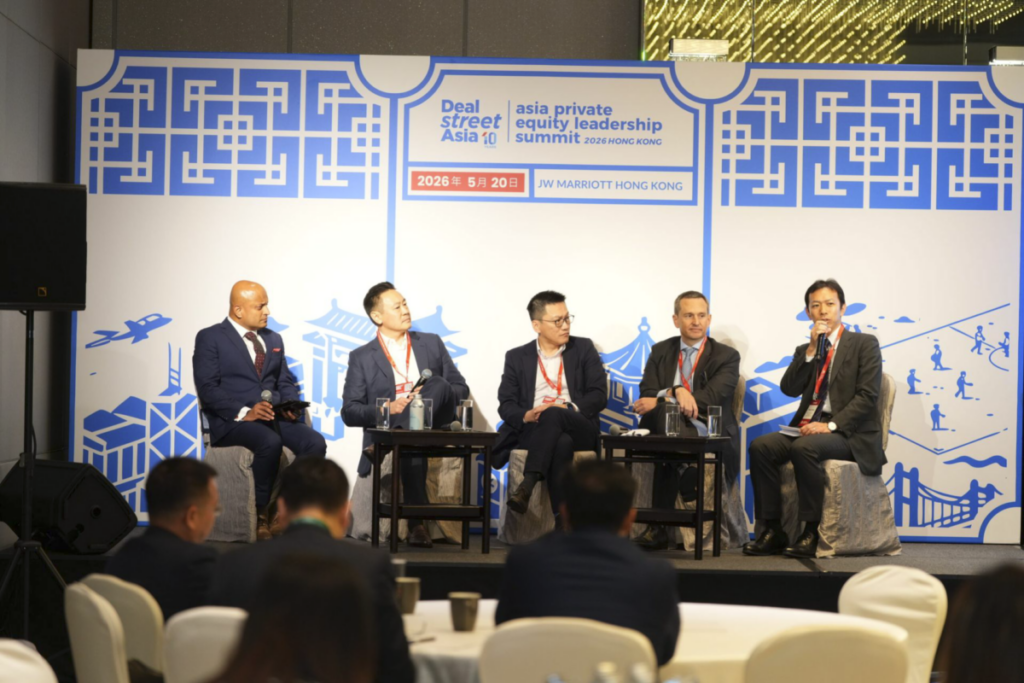
DealStreetAsia featured Paul DiGiacomo, Managing Partner at BDA Partners, as a speaker on the panel “Why Developed Asia Is Setting the Pace for Private Capital” at the Asia PE Leadership Summit 2026 in Hong Kong.
“Western capital allocation to China really slowed down or dried up over the last couple of years,” said DiGiacomo. “Japan has been the one market everyone has been excited about because it can absorb a large amount of capital.”
DiGiacomo noted that Japan’s appeal is driven less by macroeconomic growth and more by established private equity playbooks, including corporate carve-outs, succession deals, and operational improvements.
“It comes down to returns, and people have figured out how to make money in Japan,” he said.
Developed Asia is also attracting investment beyond traditional buyouts, with panelists highlighting infrastructure, data centers, healthcare, energy transition, structured capital, and private credit as areas of growing interest.
DiGiacomo added that Korea could see a rebound in activity following a difficult 2025, citing stronger pitch activity, mandates, and inbound inquiries. China, meanwhile, could eventually re-enter the developed Asia discussion as investors adapt to a lower-growth environment.
“People will figure out how to make money in China the same way they did in Japan,” he said.
The US food and beverage market is no longer a monolith — it is a mosaic of micro-communities, lifestyle tribes, and fragmented consumer behaviors. The traditional “Big Food” playbook of relentless scale, mass-market advertising, and broad consumer appeal is being rewritten in real time. Consumers are becoming more selective, loyalty is less durable, and relevance increasingly matters more than reach.
At the center of this shift is the emergence of the “barbell consumer.” Americans are simultaneously trading down and trading up – cutting costs on commoditized staples while spending aggressively on products tied to health, functionality, convenience, sustainability, and personal identity. Consumers may buy generic pantry items, yet still willingly pay premiums for gut-health sodas, high-protein snacks, mushroom coffees, clean-label products, and functional beverages positioned around energy, recovery, focus, and wellness.
In many ways, functionality has become the new flavor. It is no longer enough for products to simply taste good; increasingly, consumers expect them to do something. Food and beverages are becoming tools for self-optimization, moderation, stress management, and emotional wellbeing. Brands like Poppi and Ritual Zero Proof resonate not just because of flavor, but because they offer consumers a clear “reason to believe” and fit into broader lifestyle narratives around wellness and modern consumption habits.
At the same time, discovery itself is being rewired. Consumers increasingly find brands through creators, communities, TikTok, Instagram, Reddit threads, and AI-driven recommendations rather than solely through the traditional retail shelf. As algorithms play a larger role in purchasing decisions, brands are no longer competing only for distribution – they are competing for cultural relevance, community engagement, and discoverability.
This dynamic increasingly favors smaller challenger brands over traditional incumbents. Many of the fastest-growing brands today are built around highly specific communities and behaviors — from sober-curious consumers to high-performance wellness enthusiasts — rather than trying to appeal to everyone. These companies are often engineered for digital discovery from day one, with sharper positioning, faster innovation cycles, and stronger consumer engagement.
We are also seeing the rise of what could be called “eatertainment” — where food and beverage increasingly sit at the intersection of wellness, identity, social ritual, and experience. Consumers are no longer eating simply for sustenance; they are eating to socialize, self-care, optimize performance, reduce stress, and express personal values. The result is a fundamentally different competitive landscape: private label continues gaining share at the value end, focused insurgent brands dominate growth at the premium end, and the middle becomes increasingly difficult to defend.
For Asian acquirers, some of the most compelling US targets increasingly fall into two categories: “Third Culture” brands that bridge Western formats with authentic Asian flavors, and high-growth functional health brands that can be exported into rapidly aging or increasingly health-conscious Asian consumer markets.
BDA is actively tracking differentiated investment and acquisition opportunities across the sector. Our deep cross-border relationships and experience advising both Asian strategics and North American founder-led brands position us to help clients navigate this rapidly evolving market.
About BDA
BDA Partners is the global investment banking advisor. We are a premium provider of advice to sophisticated clients globally, with 30 years’ experience advising on cross-border M&A, capital raising, and financial restructuring. We provide global reach with our teams in New York and London, and true regional depth through our Asian offices in Mumbai, Singapore, Ho Chi Minh City, Hong Kong, Shanghai, Seoul and Tokyo. BDA has expertise in the Chemicals, Consumer & Retail, Health, Industrials, Services, Sustainability and Technology sectors. We work relentlessly to earn clients’ trust by delivering insightful advice and outstanding outcomes. BDA Partners has strategic partnerships with William Blair, a premier global investment banking business, and with DBJ (Development Bank of Japan), a Japanese government-owned bank with US$150bn of assets.
US securities transactions are performed by BDA Partners’ affiliate, BDA Advisors Inc, a broker-dealer registered with the SEC. BDA Advisors Inc is a member of FINRA and SIPC. In the UK, BDA Partners is authorized and regulated by the FCA. In Hong Kong, BDA Partners (HK) Ltd is licensed and regulated by the SFC to conduct Type 1 and Type 4 regulated activities to professional investors. bdapartners.com
Coffee is one of the world’s most widely traded and consumed commodities, but in many of its traditional strongholds the category is already mature. The global coffee market was valued at US$256bn in 2025 and is projected to grow at a CAGR of 4.5% through 2034 – steady expansion for an already well-established category. Asia-Pacific market valued at US$68bn in 2025, by contrast, is expected to grow at nearly 6.2% CAGR, with India at a very different point on the adoption curve growing at 8% year-on-year.
Europe, Japan and North America, which together accounted for more than half of global coffee consumption in 2023, remain well-established markets where value per cup continues to rise, driven by premiumization, sustainability-led purchasing and the rapid growth of convenience formats such as pods and ready-to-drink offerings.
Among late-blooming coffee markets, China’s adoption story has been well documented, with domestic consumption growing by more than 150% over the past decade (2015–2025). Yet it has also proven to be a more guarded market than many international operators initially anticipated.
If China has been the most closely watched “new coffee” market of the last decade, India is increasingly emerging as the next one to watch. It is younger, fast-urbanising, English-comfortable and culturally receptive to global café formats, yet still materially underpenetrated on consumption.
About BDA
BDA Partners is the global investment banking advisor. We are a premium provider of advice to sophisticated clients globally, with 30 years’ experience advising on cross-border M&A, capital raising, and financial restructuring. We provide global reach with our teams in New York and London, and true regional depth through our Asian offices in Mumbai, Singapore, Ho Chi Minh City, Hong Kong, Shanghai, Seoul and Tokyo. BDA has expertise in the Chemicals, Consumer & Retail, Health, Industrials, Services, Sustainability and Technology sectors. We work relentlessly to earn clients’ trust by delivering insightful advice and outstanding outcomes. BDA Partners has strategic partnerships with William Blair, a premier global investment banking business, and with DBJ (Development Bank of Japan), a Japanese government-owned bank with US$150bn of assets.
US securities transactions are performed by BDA Partners’ affiliate, BDA Advisors Inc, a broker-dealer registered with the SEC. BDA Advisors Inc is a member of FINRA and SIPC. In the UK, BDA Partners is authorized and regulated by the FCA. In Hong Kong, BDA Partners (HK) Ltd is licensed and regulated by the SFC to conduct Type 1 and Type 4 regulated activities to professional investors. bdapartners.com
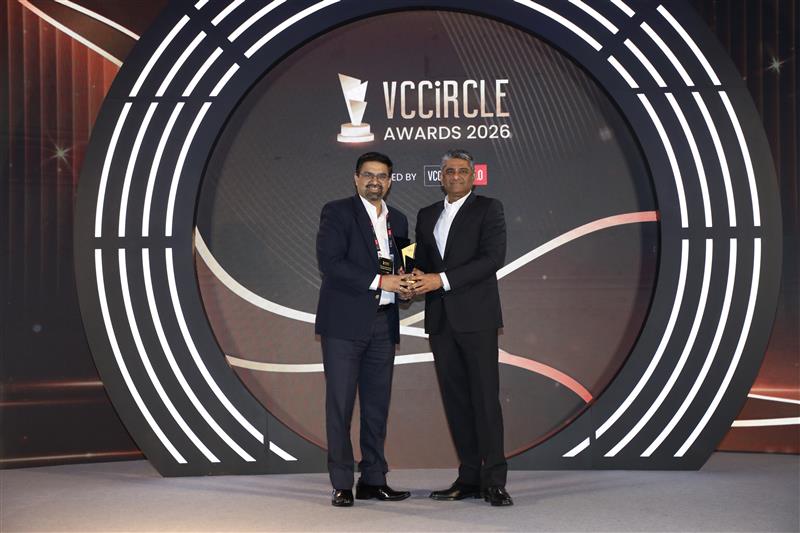
BDA Partners is pleased to have been recognized as Investment Bank of the Year by deal value at the 2026 VCCircle Awards. The VCCircle Awards are India’s most respected distinctions within the private equity and venture capital ecosystem, celebrating excellence, innovation, and value creation across high-growth businesses and their advisors.
Separately, BDA was recognized for M&A advisory excellence at the Tracxn India M&A League Table Awards.
The BDA Partners India team is led by Manoj Balwani, Kumar Mahtani and Jyotin Gagrani.
Manoj Balwani, Head of Tech, US & India, BDA Partners, said, “Over the past five years, we’ve built BDA’s Technology practice brick by brick across the US–India corridor, earning the trust of founders, private equity funds, and CXOs of global technology services companies along the way. We’ve been thoughtful in partnering on a number of marquee transactions and, over the past year, have been privileged to be at the center of some of the most game-changing deals in the Technology Services sector across this corridor. This recognition reflects the trust our clients have placed in us. We’re committed to building on this momentum in the years ahead”.
Euan Rellie, Managing Partner, BDA Partners, said, “BDA’s team has been helping blue-chip corporates and private equity clients originate and execute increasingly sizeable, innovative, and sophisticated Indian transactions across the Consumer, Healthcare, Industrials and Tech sectors. We’ve seen tremendous success in the Technology and Tech Services verticals; BDA has developed a strong track record in the US–India corridor. We’re proud to be recognized once again as a leader in our industry”.
Jyotin Gagrani, Managing Director, was honoured to receive this award on behalf of BDA Partners. Please see the announcement speech here.
About BDA
BDA Partners is the global investment banking advisor. We are a premium provider of advice to sophisticated clients globally, with 30 years’ experience advising on cross-border M&A, capital raising, and financial restructuring. We provide global reach with teams in New York and London, and true regional depth through Asian offices in Mumbai, Singapore, Ho Chi Minh City, Hong Kong, Shanghai, Seoul and Tokyo. BDA has expertise in the Chemicals, Consumer & Retail, Health, Industrials, Services, Sustainability and Technology sectors. We work relentlessly to earn clients’ trust by delivering insightful advice and outstanding outcomes. BDA Partners has strategic partnerships with William Blair, a premier global investment banking business, and with DBJ (Development Bank of Japan), a Japanese government-owned bank with US$150bn of assets.
US securities transactions are performed by BDA Partners’ affiliate, BDA Advisors Inc, a broker-dealer registered with the SEC. BDA Advisors Inc is a member of FINRA and SIPC. In the UK, BDA Partners is authorized and regulated by the FCA. In Hong Kong, BDA Partners (HK) Ltd is licensed and regulated by the SFC to conduct Type 1 and Type 4 regulated activities to professional investors. bdapartners.com
Asia’s travel market is no longer recovering. It is being rebuilt.
The years of pent-up demand and border reopenings have passed. What is taking shape now is a structural reallocation of capital into hospitality and travel infrastructure across the region. Private equity firms are acquiring and repositioning hotels at scale. Listed travel platforms are generating stronger profits. A generation of travelers from Mumbai to Shanghai to Jakarta is spending more, traveling farther, and expecting more when they arrive.
The numbers frame the opportunity. Asia accounts for 31% of global international travel demand, led by East and Southeast Asia. Hotel investment across Asia-Pacific is forecast to reach US$13.3bn in 2026, up from US$11.9bn in 2025. Southeast Asia’s travel and tourism market is projected to grow from US$39.5bn in 2026 to US$67.4bn by 2031, a CAGR of 11%.
Three markets are driving deal activity. Japan benefits from a weak yen, record inbound arrivals, and a government target of 60 million visitors by 2030. India is growing on the back of a vast domestic middle class and double-digit transaction volumes. Vietnam is attracting infrastructure capital, with Long Thanh Airport the clearest signal, and is positioning itself as the region’s premium coastal destination. China’s outbound market has not fully recovered, but domestic travel is strong, and Chinese tourists moving through Singapore and Japan are spending at the luxury end.
Investors should track opportunities that combine near-term yield with longer-term platform potential. Branded hotel operators, regional online travel agencies, and asset-light hospitality concepts are all attracting attention. The most attractive targets are those with local relevance, scalable operations, and clear positioning in the premium segment.
Please read the full article here.
About BDA
BDA Partners is the global investment banking advisor. We are a premium provider of advice to sophisticated clients globally, with 30 years’ experience advising on cross-border M&A, capital raising, and financial restructuring. We provide global reach with our teams in New York and London, and true regional depth through our Asian offices in Mumbai, Singapore, Ho Chi Minh City, Hong Kong, Shanghai, Seoul and Tokyo. BDA has expertise in the Chemicals, Consumer & Retail, Health, Industrials, Services, Sustainability and Technology sectors. We work relentlessly to earn clients’ trust by delivering insightful advice and outstanding outcomes. BDA Partners has strategic partnerships with William Blair, a premier global investment banking business, and with DBJ (Development Bank of Japan), a Japanese government-owned bank with US$150bn of assets.
US securities transactions are performed by BDA Partners’ affiliate, BDA Advisors Inc, a broker-dealer registered with the SEC. BDA Advisors Inc is a member of FINRA and SIPC. In the UK, BDA Partners is authorized and regulated by the FCA. In Hong Kong, BDA Partners (HK) Ltd is licensed and regulated by the SFC to conduct Type 1 and Type 4 regulated activities to professional investors. bdapartners.com
Across Asia, professional sport is entering a new phase of investability. The category is moving beyond trophy ownership, celebrity adjacency, and opportunistic minority stakes. A growing set of assets is now being underwritten as durable media and entertainment platforms with clearer pathways to value creation and liquidity.
This isn’t a Western playbook transplanted to Asia. It’s the same institutional forces: scarcity, durable media rights, deepening sponsorship demand, and professional governance now showing up at scale in select Asian markets, amplified by uniquely Asian accelerants: mobile-first distribution, platform commerce, and fast consumer premiumization.
What’s changing most is the definition of the product. A franchise is becoming less a local team and more a rights-bearing IP engine with multiple monetization layers:
- Content and rights: linear + streaming + highlights + social formats
- Sponsorship inventory: integrations + digital activations + measurable outcomes
- Direct-to-fan: ticketing yield, memberships, merch, experiences, loyalty
- Distribution and data: first-party identity, platform partnerships, repeatable conversion loops
This is why the best assets are increasingly treated as media infrastructure, not purely cyclical sports businesses.
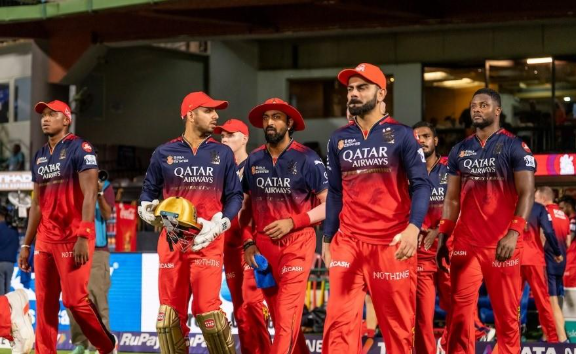
Royal Challengers Bengaluru
The three investment lanes emerging in Asian sport
Asian professional sport is not one market. Capital is clustering into three distinct “lanes”, each with its own underwriting logic:
1. Scarcity-driven flagship leagues

Gujarat Titans
This lane looks most like the global institutional model: a limited number of premium franchises, structured media economics, and large monetizable audiences. These are among the few Asian assets that can support institutional processes at scale: secondary stake sales, structured liquidity, and scaled minority placements.
Examples of teams and assets:
- IPL (India): Royal Challengers Bengaluru (RCB) and Rajasthan Royals, where global investors have reportedly explored minority stakes amid heightened valuation scrutiny
- IPL (India): Gujarat Titans, an early proof-point for IPL liquidity following CVC Capital Partners’ entry and the later majority stake sale (67%) to Torrent Group
- India (T20 cricket): Lucknow Super Giants, acquired by RPSG Group for a reported US$946m, demonstrating the scale of checks available for top-tier Indian franchises
- A-Leagues (Australia): Australian Professional Leagues (APL), Silver Lake’s minority stake illustrating league-level institutional underwriting of rights-led platforms
India as the capital formation engine
India has been the most active market for private capital deployment into Asian sport since 2021. Capital has flowed not only into franchises, but also into media rights, sports technology, fan engagement platforms, and infrastructure.
The institutionalization of the Indian Premier League has been central to this shift. CVC Capital Partners’ investment in Gujarat Titans demonstrated that Indian cricket could meet global private equity underwriting standards. The subsequent stake sale reinforced exit credibility.
Beyond cricket, capital deployment has broadened:
- Strategic and financial investors have evaluated minority stakes in Royal Challengers Bengaluru and Rajasthan Royals
- Global firms such as KKR have expanded exposure to sports platforms, including agreement to acquire Arctos Partners for US$1.4bn to strengthen minority stake capabilities
- Silver Lake has continued to build a global sports and entertainment portfolio, including league-level investments in Australia
PE-VC Investments in sports space in India
| Company | Sector | Investor | Amount ($m) |
| Lucknow Franchise | Sports Team (T20 Cricket) | RPSG Group | 946 |
| Gujarat Titans | Sports Team (T20 Cricket) | CVC Capital Partners* | 760 |
| Emerging Media | Sports Team (T20 Cricket) | Footpath Ventures | N/A |
| Ultimate Kho Kho | Sports League (Kho Kho) | BNP Group | N/A |
| Emerging Media | Sports Team (T20 Cricket) | RedBird Capital Partners, Other | N/A |
Broader investor landscape: capital allocation across Asia
Beyond India, several private equity groups, family offices, and corporates are actively assessing Asian sports opportunities. KKR have agreed to acquire Arctos Partners for US$1.4bn, enhancing its minority stake capabilities globally with Asia flagged as a 2026 priority. CVC Capital Partners is seeking external funding for its Global Sport Group to expand in Asia-Pacific, targeting undervalued leagues like volleyball and rugby. AquaBloom International Sports is fundraising to acquire Western assets for China’s rapidly growing spectator sports market. Anta Sports is exploring acquisitions aligned with Asia’s 6.4% compound annual growth rate (CAGR) apparel expansion following its Puma transaction.
Karim Ben Rejeb’s Asia-Pacific fund targets under-commercialized leagues and esports. South Korean consortiums have explored cross-border deals, including rumored interest in the San Diego Padres and a celebrity-backed group (including SUGA from BTS and former MLB player Chan Ho Park, alongside Ascend Partners) evaluating the Oakland Athletics. Family offices like Blue Pool Capital are launching sports vehicles targeting trophy assets including the Miami Dolphins.
What investors are paying for: scarcity + brand power + repeatable media “resets”
2. Governance-and-uplift markets

J.League
In several markets, the opportunity is less about bidding wars and more about modernization: commercial teams, sponsorship packaging, ticketing yield, and professional governance. Here, the “asset” is often not just the club but the ecosystem: facilities, media partnerships, adjacent real estate and entertainment, and multi-club or multi-property strategies.
Examples:
- J.League (Japan): Yokohama F. Marinos, City Football Group’s minority stake as an example of structured participation tied to professionalization and multi-club capabilities
- Japan: Omiya Ardija (RB Omiya Ardija) following Red Bull’s acquisition, building a club-network footprint with an operator-led playbook
What investors are paying for: operational upside + formalization + long runway
3. Digital-native formats and new IP
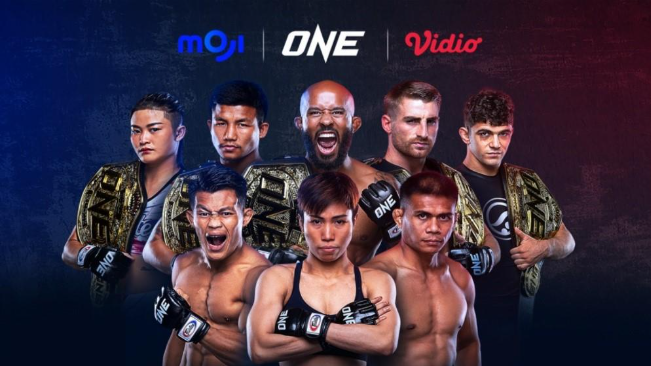
ONE Championship
The fastest-growing lane is built for the algorithm: shorter-format, creator-amplified, streaming-first properties designed to convert attention into community and commerce. These investments often behave more like modern media and consumer platforms than traditional sports teams.
Examples of format-as-IP:
- ONE Championship (Singapore): digital-forward combat sports media property;funding has been framed around growth, media partnerships, and platform scaling rather than matchday economics
- Esports World Cup (Saudi Arabia / Riyadh): purpose-built esports event platform with more than US$70m prize pool and explicit mechanisms to professionalize clubs, illustrative of engineered “new IP” built with incentives, distribution, and ecosystem design
- Hero Esports’ Asian Champions League (China): a multi-title tournament series positioned as an Asia-wide competition format with a large prize pool, showing how esports IP can be structured as scalable, sponsor-ready rights products
What investors are paying for: distribution + engagement loops + format scalability
Why capital is moving now
Private capital is leaning into Asian professional sports because the revenue model is becoming easier to underwrite and exits are starting to look real.
In the strongest markets, cash flows are increasingly anchored by durable media economics: longer-dated agreements, scaling digital distribution, and repeatable rights resets that can reprice assets over time. Sponsorship demand is also deepening across multinational brands and powerful domestic advertisers, making commercial revenue less episodic and more programmatic.
Just as importantly, the operating environment is improving. Better governance and clearer oversight reduce ownership friction and enable broader institutional participation. Macro tailwinds reinforce the case: exposure to fast-growing consumer markets and inflation-linked revenue characteristics can help mitigate currency risk over long holding periods.
The final catalyst is institutional: exit credibility. Liquidity pathways, including strategic sales, secondary stake transactions, and eventually public-market options, are becoming clearer. That shifts the conversation from headline valuations to fundamentals: media durability, sponsorship depth, governance quality, cost discipline, and liquidity design.
BDA perspective: where we expect value creation across Asia
We see the most durable opportunity where owners and investors combine scarcity with professional monetization execution. Practically, that means:
1. The real adjacency is commerce and distribution
The largest monetization delta often sits in memberships, premium experiences, travel and hospitality bundles, and platform partnerships that convert fandom into recurring spend, especially powerful in Asia’s mobile-first ecosystems
2. Turn scarcity into pricing power, not just headline valuation
Scarcity is table stakes in premium leagues; winners convert it into measurable repricing across rights, sponsorship, and matchday yield. The key is a credible “reset story” that compounds value between rights cycles
3. Build a rights stack, not a single rights deal
Sophisticated owners are moving from monolithic broadcast contracts to layered packages: live rights, highlights, shoulder content, creator clips, data products, and localized feeds, maximizing reach while preserving scarcity
4. Shift sponsorship from logos to performance contracts
Many Asian markets still price sponsorship inefficiently. The next step is standardized digital inventory, attribution, and outcome-based pricing. Owners who build the data plumbing widen the sponsorship wallet and reduce cyclicality
5. Treat governance as an exit enabler
Clean minority protections, predictable decision rights, audited reporting, and professional boards don’t just reduce risk, they expand the buyer universe and enable secondaries and structured liquidity
6. Expect liquidity to come from engineered transactions, not only control sales
Partial exits, secondaries, preferred equity, and structured instruments can create liquidity while preserving control, especially for founder- or corporate-owned franchises
How BDA can help
BDA is here to help clients navigate the rapid evolution of professional sport across Asia. As a global boutique advisor, we bring deep cross-border experience and sector insight to support investors, owners, and corporates as they engage with this increasingly institutional market.
We help clients identify strategic opportunities, connect with the right partners, and unlock transactions that translate growing fan engagement and media relevance into tangible enterprise value. With a long track record advising on brand-led, consumer, and media businesses, BDA stands ready to guide clients looking to capture the next wave of growth in Asia’s sports ecosystem.

About BDA
BDA Partners is the global investment banking advisor. We are a premium provider of advice to sophisticated clients globally, with 30 years’ experience advising on cross-border M&A, capital raising, and financial restructuring. We provide global reach with our teams in New York and London, and true regional depth through our Asian offices in Mumbai, Singapore, Ho Chi Minh City, Hong Kong, Shanghai, Seoul and Tokyo. BDA has expertise in the Chemicals, Consumer & Retail, Health, Industrials, Services, Sustainability and Technology sectors. We work relentlessly to earn clients’ trust by delivering insightful advice and outstanding outcomes. BDA Partners has strategic partnerships with William Blair, a premier global investment banking business, and with DBJ (Development Bank of Japan), a Japanese government-owned bank with US$150bn of assets.
US securities transactions are performed by BDA Partners’ affiliate, BDA Advisors Inc, a broker-dealer registered with the SEC. BDA Advisors Inc is a member of FINRA and SIPC. In the UK, BDA Partners is authorized and regulated by the FCA. In Hong Kong, BDA Partners (HK) Ltd is licensed and regulated by the SFC to conduct Type 1 and Type 4 regulated activities to professional investors. bdapartners.com