
2026/02/21
All to play for: professional sport is booming in Asia
Across Asia, professional sport is entering a new phase of investability. The category is moving beyond trophy ownership, celebrity adjacency, and opportunistic minority stakes. A growing set of assets is now being underwritten as durable media and entertainment platforms with clearer pathways to value creation and liquidity.
This isn’t a Western playbook transplanted to Asia. It’s the same institutional forces: scarcity, durable media rights, deepening sponsorship demand, and professional governance now showing up at scale in select Asian markets, amplified by uniquely Asian accelerants: mobile-first distribution, platform commerce, and fast consumer premiumization.
What’s changing most is the definition of the product. A franchise is becoming less a local team and more a rights-bearing IP engine with multiple monetization layers:
- Content and rights: linear + streaming + highlights + social formats
- Sponsorship inventory: integrations + digital activations + measurable outcomes
- Direct-to-fan: ticketing yield, memberships, merch, experiences, loyalty
- Distribution and data: first-party identity, platform partnerships, repeatable conversion loops
This is why the best assets are increasingly treated as media infrastructure, not purely cyclical sports businesses.
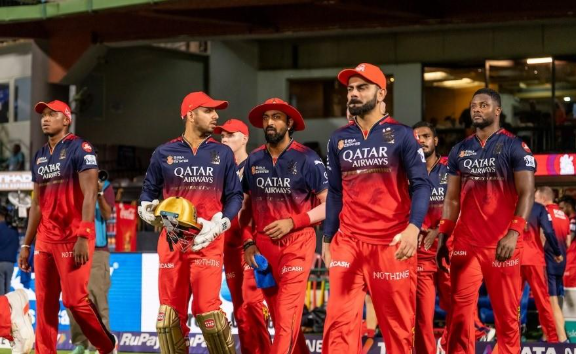
Royal Challengers Bengaluru
The three investment lanes emerging in Asian sport
Asian professional sport is not one market. Capital is clustering into three distinct “lanes”, each with its own underwriting logic:
1. Scarcity-driven flagship leagues
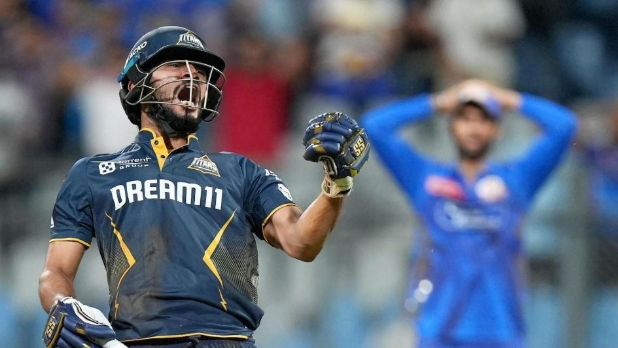
Gujarat Titans
This lane looks most like the global institutional model: a limited number of premium franchises, structured media economics, and large monetizable audiences. These are among the few Asian assets that can support institutional processes at scale: secondary stake sales, structured liquidity, and scaled minority placements.
Examples of teams and assets:
- IPL (India): Royal Challengers Bengaluru (RCB) and Rajasthan Royals, where global investors have reportedly explored minority stakes amid heightened valuation scrutiny
- IPL (India): Gujarat Titans, an early proof-point for IPL liquidity following CVC Capital Partners’ entry and the later majority stake sale (67%) to Torrent Group
- India (T20 cricket): Lucknow Super Giants, acquired by RPSG Group for a reported US$946m, demonstrating the scale of checks available for top-tier Indian franchises
- A-Leagues (Australia): Australian Professional Leagues (APL), Silver Lake’s minority stake illustrating league-level institutional underwriting of rights-led platforms
India as the capital formation engine
India has been the most active market for private capital deployment into Asian sport since 2021. Capital has flowed not only into franchises, but also into media rights, sports technology, fan engagement platforms, and infrastructure.
The institutionalization of the Indian Premier League has been central to this shift. CVC Capital Partners’ investment in Gujarat Titans demonstrated that Indian cricket could meet global private equity underwriting standards. The subsequent stake sale reinforced exit credibility.
Beyond cricket, capital deployment has broadened:
- Strategic and financial investors have evaluated minority stakes in Royal Challengers Bengaluru and Rajasthan Royals
- Global firms such as KKR have expanded exposure to sports platforms, including agreement to acquire Arctos Partners for US$1.4bn to strengthen minority stake capabilities
- Silver Lake has continued to build a global sports and entertainment portfolio, including league-level investments in Australia
PE-VC Investments in sports space in India
| Company | Sector | Investor | Amount ($m) |
| Lucknow Franchise | Sports Team (T20 Cricket) | RPSG Group | 946 |
| Gujarat Titans | Sports Team (T20 Cricket) | CVC Capital Partners* | 760 |
| Emerging Media | Sports Team (T20 Cricket) | Footpath Ventures | N/A |
| Ultimate Kho Kho | Sports League (Kho Kho) | BNP Group | N/A |
| Emerging Media | Sports Team (T20 Cricket) | RedBird Capital Partners, Other | N/A |
Broader investor landscape: capital allocation across Asia
Beyond India, several private equity groups, family offices, and corporates are actively assessing Asian sports opportunities. KKR have agreed to acquire Arctos Partners for US$1.4bn, enhancing its minority stake capabilities globally with Asia flagged as a 2026 priority. CVC Capital Partners is seeking external funding for its Global Sport Group to expand in Asia-Pacific, targeting undervalued leagues like volleyball and rugby. AquaBloom International Sports is fundraising to acquire Western assets for China’s rapidly growing spectator sports market. Anta Sports is exploring acquisitions aligned with Asia’s 6.4% compound annual growth rate (CAGR) apparel expansion following its Puma transaction.
Karim Ben Rejeb’s Asia-Pacific fund targets under-commercialized leagues and esports. South Korean consortiums have explored cross-border deals, including rumored interest in the San Diego Padres and a celebrity-backed group (including SUGA from BTS and former MLB player Chan Ho Park, alongside Ascend Partners) evaluating the Oakland Athletics. Family offices like Blue Pool Capital are launching sports vehicles targeting trophy assets including the Miami Dolphins.
What investors are paying for: scarcity + brand power + repeatable media “resets”
2. Governance-and-uplift markets
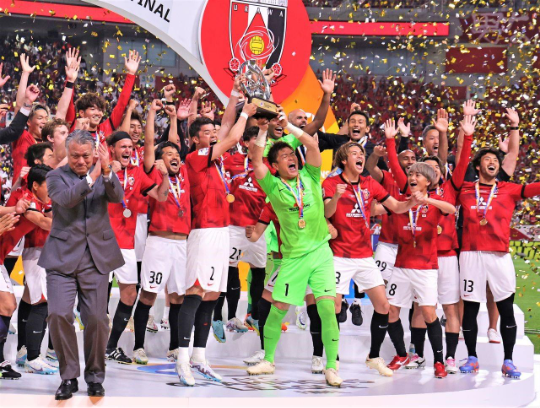
J.League
In several markets, the opportunity is less about bidding wars and more about modernization: commercial teams, sponsorship packaging, ticketing yield, and professional governance. Here, the “asset” is often not just the club but the ecosystem: facilities, media partnerships, adjacent real estate and entertainment, and multi-club or multi-property strategies.
Examples:
- J.League (Japan): Yokohama F. Marinos, City Football Group’s minority stake as an example of structured participation tied to professionalization and multi-club capabilities
- Japan: Omiya Ardija (RB Omiya Ardija) following Red Bull’s acquisition, building a club-network footprint with an operator-led playbook
What investors are paying for: operational upside + formalization + long runway
3. Digital-native formats and new IP
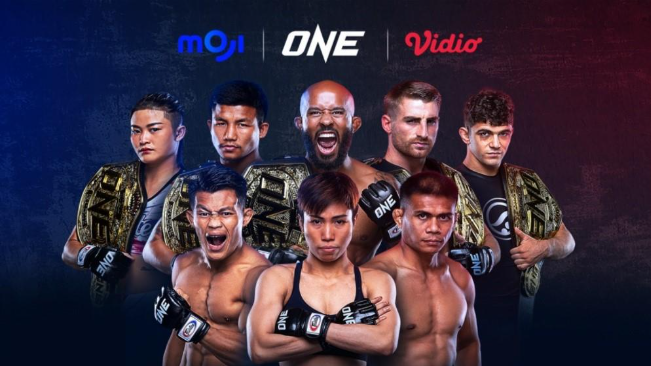
ONE Championship
The fastest-growing lane is built for the algorithm: shorter-format, creator-amplified, streaming-first properties designed to convert attention into community and commerce. These investments often behave more like modern media and consumer platforms than traditional sports teams.
Examples of format-as-IP:
- ONE Championship (Singapore): digital-forward combat sports media property;funding has been framed around growth, media partnerships, and platform scaling rather than matchday economics
- Esports World Cup (Saudi Arabia / Riyadh): purpose-built esports event platform with more than US$70m prize pool and explicit mechanisms to professionalize clubs, illustrative of engineered “new IP” built with incentives, distribution, and ecosystem design
- Hero Esports’ Asian Champions League (China): a multi-title tournament series positioned as an Asia-wide competition format with a large prize pool, showing how esports IP can be structured as scalable, sponsor-ready rights products
What investors are paying for: distribution + engagement loops + format scalability
Why capital is moving now
Private capital is leaning into Asian professional sports because the revenue model is becoming easier to underwrite and exits are starting to look real.
In the strongest markets, cash flows are increasingly anchored by durable media economics: longer-dated agreements, scaling digital distribution, and repeatable rights resets that can reprice assets over time. Sponsorship demand is also deepening across multinational brands and powerful domestic advertisers, making commercial revenue less episodic and more programmatic.
Just as importantly, the operating environment is improving. Better governance and clearer oversight reduce ownership friction and enable broader institutional participation. Macro tailwinds reinforce the case: exposure to fast-growing consumer markets and inflation-linked revenue characteristics can help mitigate currency risk over long holding periods.
The final catalyst is institutional: exit credibility. Liquidity pathways, including strategic sales, secondary stake transactions, and eventually public-market options, are becoming clearer. That shifts the conversation from headline valuations to fundamentals: media durability, sponsorship depth, governance quality, cost discipline, and liquidity design.
BDA perspective: where we expect value creation across Asia
We see the most durable opportunity where owners and investors combine scarcity with professional monetization execution. Practically, that means:
1. The real adjacency is commerce and distribution
The largest monetization delta often sits in memberships, premium experiences, travel and hospitality bundles, and platform partnerships that convert fandom into recurring spend, especially powerful in Asia’s mobile-first ecosystems
2. Turn scarcity into pricing power, not just headline valuation
Scarcity is table stakes in premium leagues; winners convert it into measurable repricing across rights, sponsorship, and matchday yield. The key is a credible “reset story” that compounds value between rights cycles
3. Build a rights stack, not a single rights deal
Sophisticated owners are moving from monolithic broadcast contracts to layered packages: live rights, highlights, shoulder content, creator clips, data products, and localized feeds, maximizing reach while preserving scarcity
4. Shift sponsorship from logos to performance contracts
Many Asian markets still price sponsorship inefficiently. The next step is standardized digital inventory, attribution, and outcome-based pricing. Owners who build the data plumbing widen the sponsorship wallet and reduce cyclicality
5. Treat governance as an exit enabler
Clean minority protections, predictable decision rights, audited reporting, and professional boards don’t just reduce risk, they expand the buyer universe and enable secondaries and structured liquidity
6. Expect liquidity to come from engineered transactions, not only control sales
Partial exits, secondaries, preferred equity, and structured instruments can create liquidity while preserving control, especially for founder- or corporate-owned franchises
How BDA can help
BDA is here to help clients navigate the rapid evolution of professional sport across Asia. As a global boutique advisor, we bring deep cross-border experience and sector insight to support investors, owners, and corporates as they engage with this increasingly institutional market.
We help clients identify strategic opportunities, connect with the right partners, and unlock transactions that translate growing fan engagement and media relevance into tangible enterprise value. With a long track record advising on brand-led, consumer, and media businesses, BDA stands ready to guide clients looking to capture the next wave of growth in Asia’s sports ecosystem.
Contacts

Atticus Dobouny
Analyst
London


Latest insights

2026/03/16
BDA named Investment Bank of the Year at the VCCircle Awards, India
BDA Partners is pleased to have been recognized as Investment Bank...

2026/03/12
Asia’s Tourism Renaissance: From Rickshaws to Riches
Asia’s travel market is no longer recovering. It is being rebuilt....

2026/02/12
Happy Lunar New Year
About BDA BDA Partners is the global investment banking advisor. We are...

2026/02/06
Green is the new black. Can fashion and luxury really be sustainable, globally?...
The fashion and luxury industry, valued at trillions of dollars globally,...