
Wake up and smell the coffee: the fast-growing India market
Coffee is one of the world’s most widely traded and consumed commodities, but in many of its traditional strongholds the category is already mature. The global coffee market was valued at US$256bn in 2025 and is projected to grow at a CAGR of 4.5% through 2034 – steady expansion for an already well-established category. Asia-Pacific market valued at US$68bn in 2025, by contrast, is expected to grow at nearly 6.2% CAGR, with India at a very different point on the adoption curve growing at 8% year-on-year.
Europe, Japan and North America, which together accounted for more than half of global coffee consumption in 2023, remain well-established markets where value per cup continues to rise, driven by premiumization, sustainability-led purchasing and the rapid growth of convenience formats such as pods and ready-to-drink offerings.
Among late-blooming coffee markets, China’s adoption story has been well documented, with domestic consumption growing by more than 150% over the past decade (2015–2025). Yet it has also proven to be a more guarded market than many international operators initially anticipated.
If China has been the most closely watched “new coffee” market of the last decade, India is increasingly emerging as the next one to watch. It is younger, fast-urbanising, English-comfortable and culturally receptive to global café formats, yet still materially underpenetrated on consumption.
About BDA
BDA Partners is the global investment banking advisor. We are a premium provider of advice to sophisticated clients globally, with 30 years’ experience advising on cross-border M&A, capital raising, and financial restructuring. We provide global reach with our teams in New York and London, and true regional depth through our Asian offices in Mumbai, Singapore, Ho Chi Minh City, Hong Kong, Shanghai, Seoul and Tokyo. BDA has expertise in the Chemicals, Consumer & Retail, Health, Industrials, Services, Sustainability and Technology sectors. We work relentlessly to earn clients’ trust by delivering insightful advice and outstanding outcomes. BDA Partners has strategic partnerships with William Blair, a premier global investment banking business, and with DBJ (Development Bank of Japan), a Japanese government-owned bank with US$150bn of assets.
US securities transactions are performed by BDA Partners’ affiliate, BDA Advisors Inc, a broker-dealer registered with the SEC. BDA Advisors Inc is a member of FINRA and SIPC. In the UK, BDA Partners is authorized and regulated by the FCA. In Hong Kong, BDA Partners (HK) Ltd is licensed and regulated by the SFC to conduct Type 1 and Type 4 regulated activities to professional investors. bdapartners.com
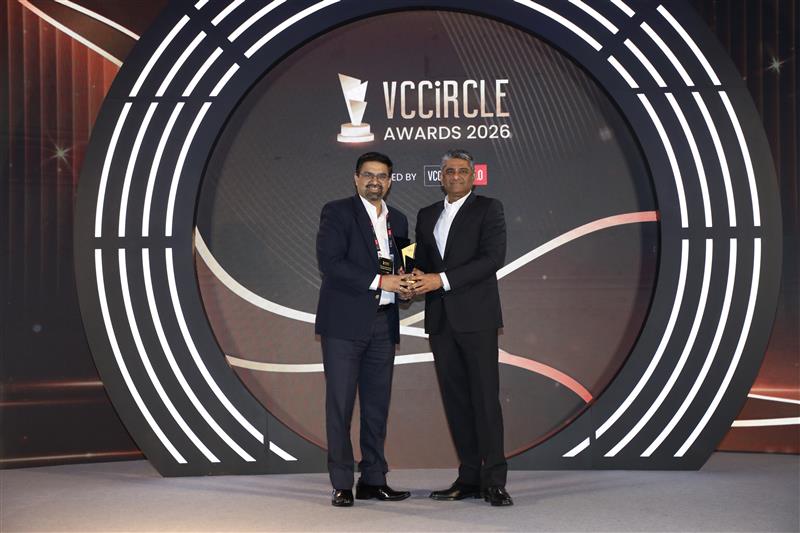
BDA Partners is pleased to have been recognized as Investment Bank of the Year by deal value at the 2026 VCCircle Awards. The VCCircle Awards are India’s most respected distinctions within the private equity and venture capital ecosystem, celebrating excellence, innovation, and value creation across high-growth businesses and their advisors.
Separately, BDA was recognized for M&A advisory excellence at the Tracxn India M&A League Table Awards.
The BDA Partners India team is led by Manoj Balwani, Kumar Mahtani and Jyotin Gagrani.
Manoj Balwani, Head of Tech, US & India, BDA Partners, said, “Over the past five years, we’ve built BDA’s Technology practice brick by brick across the US–India corridor, earning the trust of founders, private equity funds, and CXOs of global technology services companies along the way. We’ve been thoughtful in partnering on a number of marquee transactions and, over the past year, have been privileged to be at the center of some of the most game-changing deals in the Technology Services sector across this corridor. This recognition reflects the trust our clients have placed in us. We’re committed to building on this momentum in the years ahead”.
Euan Rellie, Managing Partner, BDA Partners, said, “BDA’s team has been helping blue-chip corporates and private equity clients originate and execute increasingly sizeable, innovative, and sophisticated Indian transactions across the Consumer, Healthcare, Industrials and Tech sectors. We’ve seen tremendous success in the Technology and Tech Services verticals; BDA has developed a strong track record in the US–India corridor. We’re proud to be recognized once again as a leader in our industry”.
Jyotin Gagrani, Managing Director, was honoured to receive this award on behalf of BDA Partners. Please see the announcement speech here.
About BDA
BDA Partners is the global investment banking advisor. We are a premium provider of advice to sophisticated clients globally, with 30 years’ experience advising on cross-border M&A, capital raising, and financial restructuring. We provide global reach with teams in New York and London, and true regional depth through Asian offices in Mumbai, Singapore, Ho Chi Minh City, Hong Kong, Shanghai, Seoul and Tokyo. BDA has expertise in the Chemicals, Consumer & Retail, Health, Industrials, Services, Sustainability and Technology sectors. We work relentlessly to earn clients’ trust by delivering insightful advice and outstanding outcomes. BDA Partners has strategic partnerships with William Blair, a premier global investment banking business, and with DBJ (Development Bank of Japan), a Japanese government-owned bank with US$150bn of assets.
US securities transactions are performed by BDA Partners’ affiliate, BDA Advisors Inc, a broker-dealer registered with the SEC. BDA Advisors Inc is a member of FINRA and SIPC. In the UK, BDA Partners is authorized and regulated by the FCA. In Hong Kong, BDA Partners (HK) Ltd is licensed and regulated by the SFC to conduct Type 1 and Type 4 regulated activities to professional investors. bdapartners.com
Asia’s travel market is no longer recovering. It is being rebuilt.
The years of pent-up demand and border reopenings have passed. What is taking shape now is a structural reallocation of capital into hospitality and travel infrastructure across the region. Private equity firms are acquiring and repositioning hotels at scale. Listed travel platforms are generating stronger profits. A generation of travelers from Mumbai to Shanghai to Jakarta is spending more, traveling farther, and expecting more when they arrive.
The numbers frame the opportunity. Asia accounts for 31% of global international travel demand, led by East and Southeast Asia. Hotel investment across Asia-Pacific is forecast to reach US$13.3bn in 2026, up from US$11.9bn in 2025. Southeast Asia’s travel and tourism market is projected to grow from US$39.5bn in 2026 to US$67.4bn by 2031, a CAGR of 11%.
Three markets are driving deal activity. Japan benefits from a weak yen, record inbound arrivals, and a government target of 60 million visitors by 2030. India is growing on the back of a vast domestic middle class and double-digit transaction volumes. Vietnam is attracting infrastructure capital, with Long Thanh Airport the clearest signal, and is positioning itself as the region’s premium coastal destination. China’s outbound market has not fully recovered, but domestic travel is strong, and Chinese tourists moving through Singapore and Japan are spending at the luxury end.
Investors should track opportunities that combine near-term yield with longer-term platform potential. Branded hotel operators, regional online travel agencies, and asset-light hospitality concepts are all attracting attention. The most attractive targets are those with local relevance, scalable operations, and clear positioning in the premium segment.
Please read the full article here.
About BDA
BDA Partners is the global investment banking advisor. We are a premium provider of advice to sophisticated clients globally, with 30 years’ experience advising on cross-border M&A, capital raising, and financial restructuring. We provide global reach with our teams in New York and London, and true regional depth through our Asian offices in Mumbai, Singapore, Ho Chi Minh City, Hong Kong, Shanghai, Seoul and Tokyo. BDA has expertise in the Chemicals, Consumer & Retail, Health, Industrials, Services, Sustainability and Technology sectors. We work relentlessly to earn clients’ trust by delivering insightful advice and outstanding outcomes. BDA Partners has strategic partnerships with William Blair, a premier global investment banking business, and with DBJ (Development Bank of Japan), a Japanese government-owned bank with US$150bn of assets.
US securities transactions are performed by BDA Partners’ affiliate, BDA Advisors Inc, a broker-dealer registered with the SEC. BDA Advisors Inc is a member of FINRA and SIPC. In the UK, BDA Partners is authorized and regulated by the FCA. In Hong Kong, BDA Partners (HK) Ltd is licensed and regulated by the SFC to conduct Type 1 and Type 4 regulated activities to professional investors. bdapartners.com
Across Asia, professional sport is entering a new phase of investability. The category is moving beyond trophy ownership, celebrity adjacency, and opportunistic minority stakes. A growing set of assets is now being underwritten as durable media and entertainment platforms with clearer pathways to value creation and liquidity.
This isn’t a Western playbook transplanted to Asia. It’s the same institutional forces: scarcity, durable media rights, deepening sponsorship demand, and professional governance now showing up at scale in select Asian markets, amplified by uniquely Asian accelerants: mobile-first distribution, platform commerce, and fast consumer premiumization.
What’s changing most is the definition of the product. A franchise is becoming less a local team and more a rights-bearing IP engine with multiple monetization layers:
- Content and rights: linear + streaming + highlights + social formats
- Sponsorship inventory: integrations + digital activations + measurable outcomes
- Direct-to-fan: ticketing yield, memberships, merch, experiences, loyalty
- Distribution and data: first-party identity, platform partnerships, repeatable conversion loops
This is why the best assets are increasingly treated as media infrastructure, not purely cyclical sports businesses.
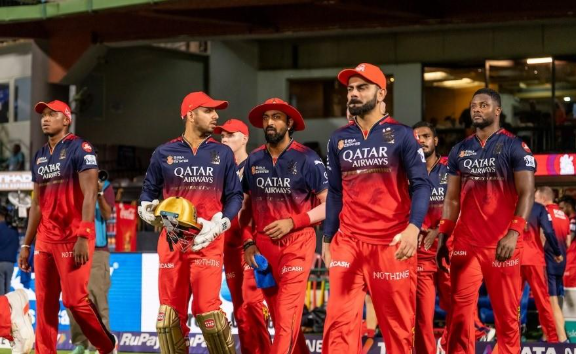
Royal Challengers Bengaluru
The three investment lanes emerging in Asian sport
Asian professional sport is not one market. Capital is clustering into three distinct “lanes”, each with its own underwriting logic:
1. Scarcity-driven flagship leagues

Gujarat Titans
This lane looks most like the global institutional model: a limited number of premium franchises, structured media economics, and large monetizable audiences. These are among the few Asian assets that can support institutional processes at scale: secondary stake sales, structured liquidity, and scaled minority placements.
Examples of teams and assets:
- IPL (India): Royal Challengers Bengaluru (RCB) and Rajasthan Royals, where global investors have reportedly explored minority stakes amid heightened valuation scrutiny
- IPL (India): Gujarat Titans, an early proof-point for IPL liquidity following CVC Capital Partners’ entry and the later majority stake sale (67%) to Torrent Group
- India (T20 cricket): Lucknow Super Giants, acquired by RPSG Group for a reported US$946m, demonstrating the scale of checks available for top-tier Indian franchises
- A-Leagues (Australia): Australian Professional Leagues (APL), Silver Lake’s minority stake illustrating league-level institutional underwriting of rights-led platforms
India as the capital formation engine
India has been the most active market for private capital deployment into Asian sport since 2021. Capital has flowed not only into franchises, but also into media rights, sports technology, fan engagement platforms, and infrastructure.
The institutionalization of the Indian Premier League has been central to this shift. CVC Capital Partners’ investment in Gujarat Titans demonstrated that Indian cricket could meet global private equity underwriting standards. The subsequent stake sale reinforced exit credibility.
Beyond cricket, capital deployment has broadened:
- Strategic and financial investors have evaluated minority stakes in Royal Challengers Bengaluru and Rajasthan Royals
- Global firms such as KKR have expanded exposure to sports platforms, including agreement to acquire Arctos Partners for US$1.4bn to strengthen minority stake capabilities
- Silver Lake has continued to build a global sports and entertainment portfolio, including league-level investments in Australia
PE-VC Investments in sports space in India
| Company | Sector | Investor | Amount ($m) |
| Lucknow Franchise | Sports Team (T20 Cricket) | RPSG Group | 946 |
| Gujarat Titans | Sports Team (T20 Cricket) | CVC Capital Partners* | 760 |
| Emerging Media | Sports Team (T20 Cricket) | Footpath Ventures | N/A |
| Ultimate Kho Kho | Sports League (Kho Kho) | BNP Group | N/A |
| Emerging Media | Sports Team (T20 Cricket) | RedBird Capital Partners, Other | N/A |
Broader investor landscape: capital allocation across Asia
Beyond India, several private equity groups, family offices, and corporates are actively assessing Asian sports opportunities. KKR have agreed to acquire Arctos Partners for US$1.4bn, enhancing its minority stake capabilities globally with Asia flagged as a 2026 priority. CVC Capital Partners is seeking external funding for its Global Sport Group to expand in Asia-Pacific, targeting undervalued leagues like volleyball and rugby. AquaBloom International Sports is fundraising to acquire Western assets for China’s rapidly growing spectator sports market. Anta Sports is exploring acquisitions aligned with Asia’s 6.4% compound annual growth rate (CAGR) apparel expansion following its Puma transaction.
Karim Ben Rejeb’s Asia-Pacific fund targets under-commercialized leagues and esports. South Korean consortiums have explored cross-border deals, including rumored interest in the San Diego Padres and a celebrity-backed group (including SUGA from BTS and former MLB player Chan Ho Park, alongside Ascend Partners) evaluating the Oakland Athletics. Family offices like Blue Pool Capital are launching sports vehicles targeting trophy assets including the Miami Dolphins.
What investors are paying for: scarcity + brand power + repeatable media “resets”
2. Governance-and-uplift markets

J.League
In several markets, the opportunity is less about bidding wars and more about modernization: commercial teams, sponsorship packaging, ticketing yield, and professional governance. Here, the “asset” is often not just the club but the ecosystem: facilities, media partnerships, adjacent real estate and entertainment, and multi-club or multi-property strategies.
Examples:
- J.League (Japan): Yokohama F. Marinos, City Football Group’s minority stake as an example of structured participation tied to professionalization and multi-club capabilities
- Japan: Omiya Ardija (RB Omiya Ardija) following Red Bull’s acquisition, building a club-network footprint with an operator-led playbook
What investors are paying for: operational upside + formalization + long runway
3. Digital-native formats and new IP
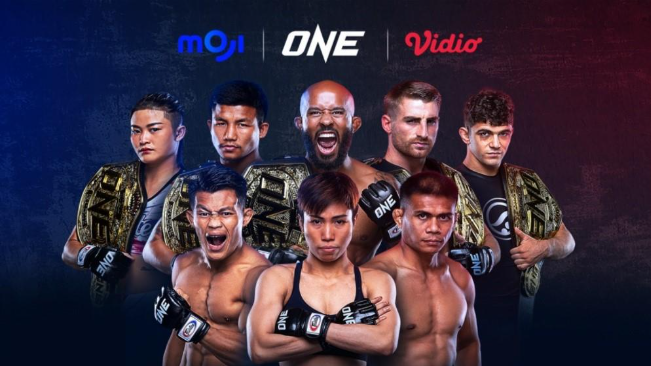
ONE Championship
The fastest-growing lane is built for the algorithm: shorter-format, creator-amplified, streaming-first properties designed to convert attention into community and commerce. These investments often behave more like modern media and consumer platforms than traditional sports teams.
Examples of format-as-IP:
- ONE Championship (Singapore): digital-forward combat sports media property;funding has been framed around growth, media partnerships, and platform scaling rather than matchday economics
- Esports World Cup (Saudi Arabia / Riyadh): purpose-built esports event platform with more than US$70m prize pool and explicit mechanisms to professionalize clubs, illustrative of engineered “new IP” built with incentives, distribution, and ecosystem design
- Hero Esports’ Asian Champions League (China): a multi-title tournament series positioned as an Asia-wide competition format with a large prize pool, showing how esports IP can be structured as scalable, sponsor-ready rights products
What investors are paying for: distribution + engagement loops + format scalability
Why capital is moving now
Private capital is leaning into Asian professional sports because the revenue model is becoming easier to underwrite and exits are starting to look real.
In the strongest markets, cash flows are increasingly anchored by durable media economics: longer-dated agreements, scaling digital distribution, and repeatable rights resets that can reprice assets over time. Sponsorship demand is also deepening across multinational brands and powerful domestic advertisers, making commercial revenue less episodic and more programmatic.
Just as importantly, the operating environment is improving. Better governance and clearer oversight reduce ownership friction and enable broader institutional participation. Macro tailwinds reinforce the case: exposure to fast-growing consumer markets and inflation-linked revenue characteristics can help mitigate currency risk over long holding periods.
The final catalyst is institutional: exit credibility. Liquidity pathways, including strategic sales, secondary stake transactions, and eventually public-market options, are becoming clearer. That shifts the conversation from headline valuations to fundamentals: media durability, sponsorship depth, governance quality, cost discipline, and liquidity design.
BDA perspective: where we expect value creation across Asia
We see the most durable opportunity where owners and investors combine scarcity with professional monetization execution. Practically, that means:
1. The real adjacency is commerce and distribution
The largest monetization delta often sits in memberships, premium experiences, travel and hospitality bundles, and platform partnerships that convert fandom into recurring spend, especially powerful in Asia’s mobile-first ecosystems
2. Turn scarcity into pricing power, not just headline valuation
Scarcity is table stakes in premium leagues; winners convert it into measurable repricing across rights, sponsorship, and matchday yield. The key is a credible “reset story” that compounds value between rights cycles
3. Build a rights stack, not a single rights deal
Sophisticated owners are moving from monolithic broadcast contracts to layered packages: live rights, highlights, shoulder content, creator clips, data products, and localized feeds, maximizing reach while preserving scarcity
4. Shift sponsorship from logos to performance contracts
Many Asian markets still price sponsorship inefficiently. The next step is standardized digital inventory, attribution, and outcome-based pricing. Owners who build the data plumbing widen the sponsorship wallet and reduce cyclicality
5. Treat governance as an exit enabler
Clean minority protections, predictable decision rights, audited reporting, and professional boards don’t just reduce risk, they expand the buyer universe and enable secondaries and structured liquidity
6. Expect liquidity to come from engineered transactions, not only control sales
Partial exits, secondaries, preferred equity, and structured instruments can create liquidity while preserving control, especially for founder- or corporate-owned franchises
How BDA can help
BDA is here to help clients navigate the rapid evolution of professional sport across Asia. As a global boutique advisor, we bring deep cross-border experience and sector insight to support investors, owners, and corporates as they engage with this increasingly institutional market.
We help clients identify strategic opportunities, connect with the right partners, and unlock transactions that translate growing fan engagement and media relevance into tangible enterprise value. With a long track record advising on brand-led, consumer, and media businesses, BDA stands ready to guide clients looking to capture the next wave of growth in Asia’s sports ecosystem.

About BDA
BDA Partners is the global investment banking advisor. We are a premium provider of advice to sophisticated clients globally, with 30 years’ experience advising on cross-border M&A, capital raising, and financial restructuring. We provide global reach with our teams in New York and London, and true regional depth through our Asian offices in Mumbai, Singapore, Ho Chi Minh City, Hong Kong, Shanghai, Seoul and Tokyo. BDA has expertise in the Chemicals, Consumer & Retail, Health, Industrials, Services, Sustainability and Technology sectors. We work relentlessly to earn clients’ trust by delivering insightful advice and outstanding outcomes. BDA Partners has strategic partnerships with William Blair, a premier global investment banking business, and with DBJ (Development Bank of Japan), a Japanese government-owned bank with US$150bn of assets.
US securities transactions are performed by BDA Partners’ affiliate, BDA Advisors Inc, a broker-dealer registered with the SEC. BDA Advisors Inc is a member of FINRA and SIPC. In the UK, BDA Partners is authorized and regulated by the FCA. In Hong Kong, BDA Partners (HK) Ltd is licensed and regulated by the SFC to conduct Type 1 and Type 4 regulated activities to professional investors. bdapartners.com
- Is the global fashion and luxury industry becoming more sustainable?
- Has sustainability reached the Asian markets?
- Is sustainability out of fashion in the US?
- Is Europe the pioneer?
- Do sustainable brands command higher valuations from investors and in M&A?
The fashion and luxury industry, valued at trillions of dollars globally, stands at a crossroads in 2026. Once synonymous with excess and rapid consumption, the sector is increasingly pivoting toward sustainability amid mounting environmental pressures, regulatory demands, and shifting consumer expectations.
This transformation is not merely cosmetic; it involves rethinking supply chains, materials, and business models to align with circular economy principles. As climate impacts intensify, sustainability has evolved from a niche concern to a strategic imperative, influencing everything from design to investor decisions.
Recent data shows that, while progress is uneven, sustainability is reshaping the industry’s future.
While the sustainable fashion segment is expanding significantly faster than the traditional market—growing at rates up to 10 times higher than the broader industry’s 2%-3%—there is a recent, visible de-prioritization of sustainability in corporate boardrooms due to economic volatility and inflation-squeezed consumers.
In 2025, only 18% of fashion executives ranked sustainability as a top-three risk for growth, a sharp decline from 29% in 2024.
And yet, for the next generation of industry executives, and consumers, sustainability is paramount.
I. Global Market Dynamics: Progress vs. Pressure
The fashion and luxury industry remains one of the world’s most resource-intensive sectors, contributing ~9% of global carbon emissions. Despite this, a fundamental shift is occurring.
The global sustainable fashion market reached US$12.5bn in 2025, with projections suggesting a compound annual growth rate (CAGR) of 9.9% through 2032.
This growth is driven by:
- Generational Demand: 65% of Gen Z consumers prefer purchasing from sustainable brands, and are often willing to pay premiums for values-aligned products.
- Technological Integration: Emerging technologies such as AI-driven virtual sampling, 3D design tools, and blockchain traceability play an increasing role in reducing waste and improving supply-chain transparency
- Circular Business Models: Resale and rental now account for roughly 10% of global apparel sales.
However, a “Sustainability Paradox” exists. While 70% of executives view sustainability as a key growth driver by 2030, two-thirds of brands currently lag behind their 2030 net-zero goals.

II. Regional Leadership: Europe as the Regulatory Pioneer
Europe remains the global regulatory leader in sustainable fashion and luxury, setting the pace not through voluntary pledges but through binding policy frameworks that are reshaping how apparel and luxury goods are designed, produced, sold, and recycled.
At the core of this shift is the European Union Strategy for Sustainable and Circular Textiles, which aims to transform the sector by 2030. The strategy prioritizes durability, repairability, recyclability, and reduced environmental impact across the full product lifecycle, signaling a structural move away from fast-turnover consumption models.
Major brands operating in Europe—including Adidas and H&M—have aligned with these objectives through commitments around preferred fibers, traceability, and circular product design. While approaches vary by brand, Europe has emerged as the testing ground where sustainability moves from aspiration to operational reality.
Crucially, Europe’s leadership lies not only in ambition, but in enforcement. The region is transitioning sustainability from a reputational issue into a compliance requirement, with direct implications for cost structures, supply-chain transparency, and product economics. This regulatory certainty is already influencing global sourcing decisions and accelerating investment in recycling, resale infrastructure, and material innovation.
| Regulation | Implementation / Impact |
| Waste Framework Directive | Requires mandatory separate collection of textiles by January 1, 2025; introduces Extended Producer Responsibility (EPR) schemes. |
| Ecodesign (ESPR) | Sets minimum standards for product durability and reparability; bans the destruction of unsold goods for large brands starting in 2026. |
| Digital Product Passport (DPP) | Mandatory by 2027–2028; requires detailed information on material composition and recyclability for all products sold in the EU. |
| Green Claims Directive | A proposal aimed at preventing unsubstantiated environmental claims. |

III. The Asian Market: From Production to Conscious Consumption
Sustainability is gaining traction across Asian markets, particularly in China and India, driven by younger, urban, and increasingly affluent consumers. While rarely the primary purchase driver, it is becoming a meaningful secondary consideration in fashion and luxury—especially among Gen Z and Millennials.
Asia-Pacific is widely forecast to be the fastest-growing region for sustainable fashion, supported by high-single-digit growth projections through 2032. This momentum reflects both rising consumer awareness and Asia’s central role in global apparel supply chains, where decarbonization and traceability efforts increasingly originate.
Consulting research, including McKinsey analysis, frames sustainability in Asia as a long-term strategic priority rather than a short-term sales lever. Progress is most visible on the supply side, with collaborative decarbonization initiatives in manufacturing hubs such as Bangladesh, Vietnam, and India becoming essential to meeting global brand requirements.
Adoption remains uneven, however. Recycled polyester continues to dominate sustainable materials due to cost constraints and limited access to next-generation fibers, highlighting ongoing challenges related to price sensitivity, infrastructure, and regulatory diversity across the region.
Key trends in Asia include:
- Rise of the Second-hand Market: China’s secondhand luxury market grew by 18% in 2025, supported by livestreaming and a growing acceptance of circularity.
- Sustainable Retail Design: Landlords in SE Asian malls are increasingly requiring “green” interior design, focusing on modular fixtures and low-carbon materials to reduce construction waste.
- Cultural Connection: The guochao (national tide) movement in China blends heritage and local identity with sustainable craftsmanship.

IV. The US Market: A Resilience Test
Sustainability is not “out of fashion” in the US, but it is under pressure. Younger consumers continue to express strong concern about environmental and social issues, even as inflation, price sensitivity, and the appeal of fast fashion constrain purchasing behavior. The result is a persistent gap between values and action.
Recent analysis from McKinsey & Company highlights that US consumers are prioritizing wellness, experiences, and value over discretionary apparel spending. In this environment, sustainability is increasingly viewed as a long-term brand and loyalty lever, rather than a short-term growth driver.
At the executive level, The Business of Fashion reports that priorities have shifted toward AI, cost control, and operational resilience. However, sustainability has not disappeared from the agenda; instead, it is being reframed around risk management, supply-chain transparency, and regulatory compliance rather than marketing-led initiatives.
Regulation is becoming the primary force sustaining momentum. In California, new disclosure and accountability rules around emissions and supply chains are coming online, increasingly echoing European-style standards. While many US executives remain focused on near-term profitability amid weak demand, the regulatory trajectory suggests sustainability will remain a structural requirement—if no longer a headline ambition.

V. Investment and Valuations: Sustainability as a Core Metric
Sustainability and ESG factors have become “hardwired” into the investment process for mergers and acquisitions (M&A).
- Due Diligence: Approximately 22% of corporate and 24% of private equity acquirers now place an emphasis on sustainability during due diligence.
- Valuation Impact: Modern AI-powered tools allow investors to surface risks like child labor or human rights violations deep within supply chains, which can significantly damage company valuations.
- Sector Growth: Venture capital is heavily flowing into innovative materials companies and resale platforms, as sustainable fashion’s growth trajectory outpaces traditional retail.
VI. Circular Economy Leaders: Six Brand Profiles
Several global brands are shifting from pilot programs to large-scale circular initiatives.
- Gucci (Kering Group): A high performer in circularity, Gucci has embedded circular design into its core and offers lifetime repair for many items to extend product longevity.
- Stella McCartney: Long a pioneer in material innovation, the brand focuses on bio-based materials and low-impact designs, partnering with venture firms to scale sustainable textiles.
- Patagonia: Regarded as a gold standard, Patagonia integrates circularity through its Worn Wear resale program and a senior-level focus on social impact and transparency.
- Coach: The brand has embraced circularity at scale through its Coachtopia sub-brand, which utilizes bulk buys of “rescued” leather scraps to create new luxury goods.
- Arc’teryx: A recent leader in circularity, this outdoor brand joined the Ellen MacArthur Foundation to focus on mono-materials and garments designed specifically for easy disassembly and recycling.
- Lululemon: Beyond its “Like New” resale program, Lululemon is investing in enzymatic recycling technology to turn textile waste back into high-performance recycled nylon.

Conclusion
The global fashion industry is no longer treating sustainability as a marketing trend but as a structural necessity for long-term viability.
While economic headwinds in 2025 caused some tactical retreats, the combination of aggressive EU regulation, high consumer demand in Asia, and the increasing role of ESG in M&A valuations suggests that circularity is becoming the new industry blueprint.
If you want to win in fashion and luxury – you must look forward, and you must act responsibly.

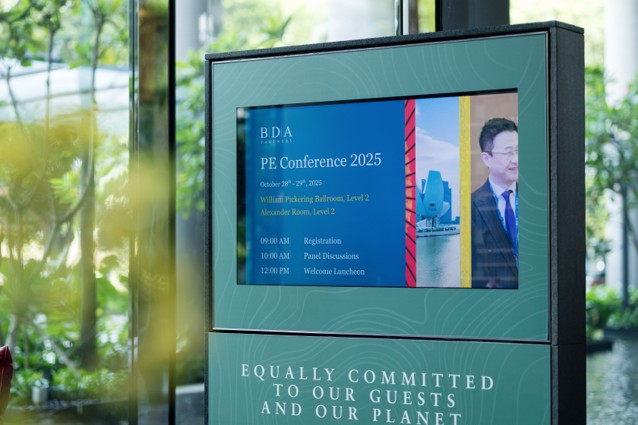
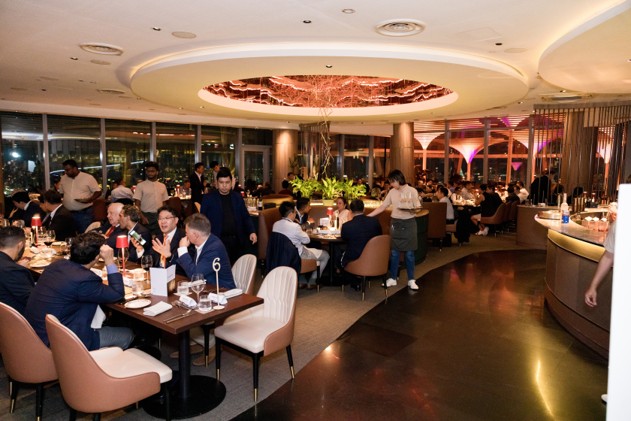
BDA Partners successfully hosted its 7th annual Private Equity Conference in October 2025 in Singapore, bringing together 30 high-growth private companies, and senior professionals from 100 leading private equity firms.
The BDA PE Conference remains a premier, invitation-only platform for the Asian private equity community. It offers a unique forum for companies and investors to engage in high-quality one-on-one meetings.
This year, we proudly featured private companies spanning six sectors: Industrials, Healthcare, Consumer, Technology, Services, and Sustainability.
We welcomed attendees from sponsors including: 65 Equity Partners, ADV, Advantage Partners, Advent, Affinity, Affirma, AGIC, AIF, Apollo, Ares, Bain, BlackRock, Blackstone, Boyu, Brookfield, Capital Square Partners, Carlyle, CDH, Celadon, Cerberus, ChrysCapital, CLSA, Cool Japan Fund, Cornell Capital, Creador, CVC, DAOL, DCP Capital, DBJ, Dymon Asia, EastBridge, EQT, Everstone, Falcon House, GIC, Goldman Sachs Asset Management, Growtheum, Gulf Capital, Hillhouse, HongShan, HOPU, ICG, IMM, Investcorp, InvestIndustrial, Khazanah Nasional, KKR, L Catterton, Longreach, Macquarie, Marubeni Growth, MBK, Morgan Stanley Global PE, Navis, Nexus Point, Novo Tellus, OTPP, PAG, Partners Group, Permira, Platinum Equity, Primavera, QIA, Quadria, SeaTown, Shaw Kwei, Stonebridge, TA Associates, Temasek, TPG, Vitruvian, Warburg Pincus.
- We orchestrated 300 one-on-one meetings between presenting companies’ CEOs, Chairmen, founders, CFOs, and senior private equity investors. These interactions enabled in-depth discussions of potential partnerships, identification of strategic opportunities, and the cultivation of future relationships.
- Sector & region panel discussions featured leading industry experts, providing actionable insights:
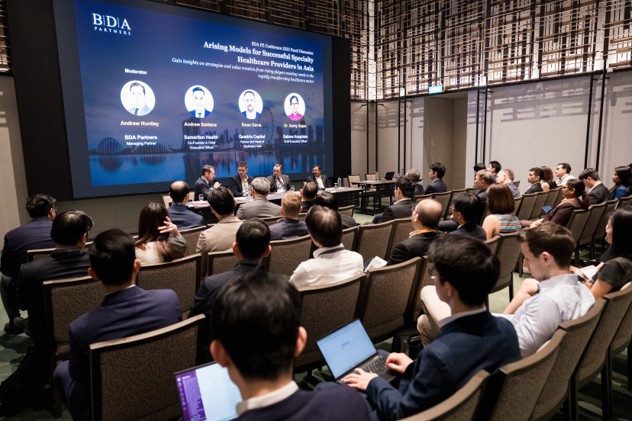
- Models for Successful Specialty Healthcare Providers in Asia, moderated by Andrew Huntley, Managing Partner & Global Head of Healthcare, BDA Partners.
- Panelists were Ewan Davis, Partner at Quadria Capital, alongside CEOs and founders of presenting healthcare companies.
The panel explored innovative growth strategies and sector trends.
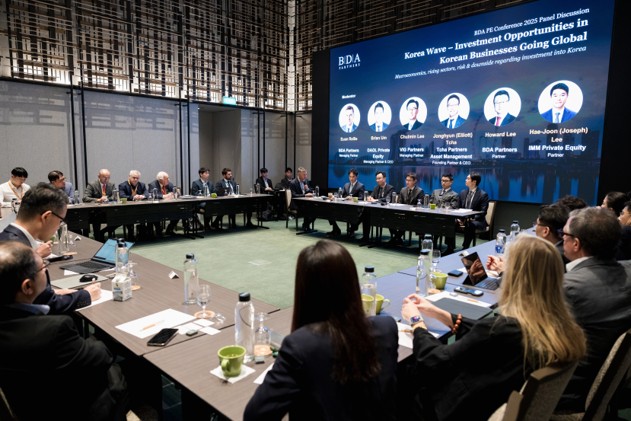
- Korea Wave: Investment Opportunities in Korean Businesses Going Global, moderated by Euan Rellie, Co-founder & Managing Partner of BDA Partners. Featured insights from:
- Jonghyun (Elliott) Tcha, Founding Partner & CEO, Tcha Partners Asset Management;
- Chulmin Lee, Managing Partner, VIG Partners;
- Hae-Joon (Joseph) Lee, Partner, IMM Private Equity;
- Brian Um, Managing Partner & CEO of DAOL Private Equity; and
- Howard Lee, Partner & Head of Seoul Office at BDA Partners.
The panel examined cross-border buyouts, platform strategies, and the worldwide expansion of K-Food and K-Beauty brands.
- PE Opportunities in Asian Industrial Technology and EMS Businesses, moderated by Simon Kavanagh, Partner & Head of Industrials at BDA Partners. Panelists were:
- Haide Hong, Senior Managing Director at Blackstone;
- Goh Soo Jin, Founder & CEO of Prime Movers Equity; and
- CEOs and CFOs of industrial presenting companies.
The panel discussed investment opportunities in technology-driven industrial platforms and scaling strategies.
Paul DiGiacomo, Managing Partner and Head of Financial Sponsors at BDA Partners, said: “The conference showcased a market full of promising opportunities ahead – for portfolio companies and for private equity investors. BDA’s role is: trusted advisor to our clients, across industries, connecting visionary management teams with the right investors. We help turn strategic ambition into tangible growth. The 2025 conference reinforced BDA’s commitment: facilitating meaningful, long-term partnerships, to drive value across the region.”


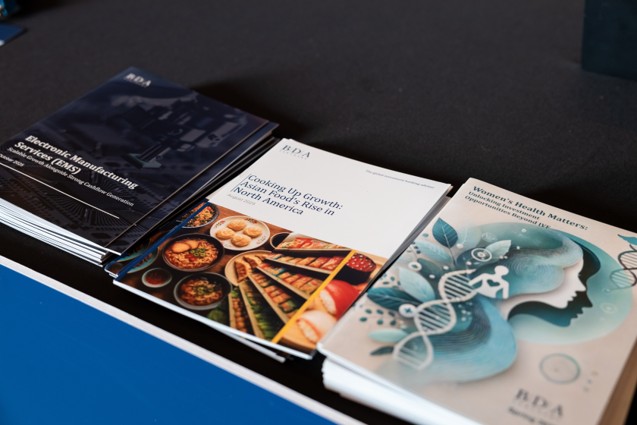



Industry panel discussions


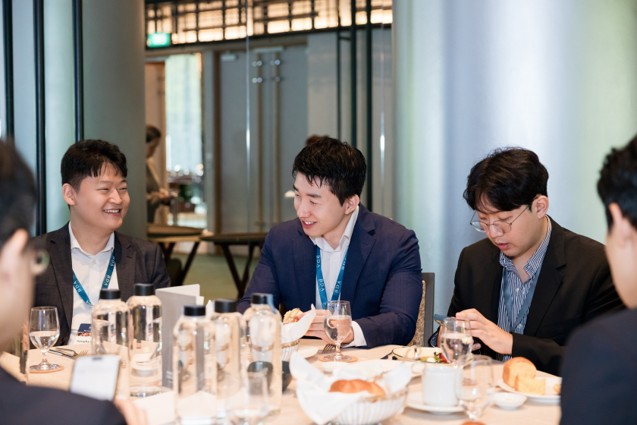
Sector wine tasting dinner



About BDA
BDA Partners is the global investment banking advisor. We are a premium provider of advice to sophisticated clients globally, with 30 years’ experience advising on cross-border M&A, capital raising, and financial restructuring. We provide global reach with our teams in New York and London, and true regional depth through our Asian offices in Mumbai, Singapore, Ho Chi Minh City, Hong Kong, Shanghai, Seoul and Tokyo. BDA has expertise in the Chemicals, Consumer & Retail, Health, Industrials, Services, Sustainability and Technology sectors. We work relentlessly to earn clients’ trust by delivering insightful advice and outstanding outcomes. BDA Partners has strategic partnerships with William Blair, a premier global investment banking business, and with DBJ (Development Bank of Japan), a Japanese government-owned bank with US$150bn of assets.
US securities transactions are performed by BDA Partners’ affiliate, BDA Advisors Inc, a broker-dealer registered with the SEC. BDA Advisors Inc is a member of FINRA and SIPC. In the UK, BDA Partners is authorized and regulated by the FCA. In Hong Kong, BDA Partners (HK) Ltd is licensed and regulated by the SFC to conduct Type 1 and Type 4 regulated activities to professional investors. bdapartners.com
As we begin 2026 with a record book of business, BDA Partners is pleased to recognize advancements across our team. A solid number of colleagues are being promoted, reflecting their continued growth, impact, and commitment to the firm.
Promoted to Partner
Cliff Li, Hong Kong
Promoted to Managing Director
Phuoc Pham, Ho Chi Minh City
Ruari Sinclair, London
Promoted to Director
Andreas Messerschmidt, London
Nils Weng, London
Promoted to VP
Teddy Kim, Seoul
Ryota Kobayashi, Tokyo
Minh Pham, Ho Chi Minh City
Chenge Sun, Singapore
Promoted to Associate
Mahimn Bhatt, Mumbai
Harsh Jogani, Mumbai
Iris Lai, Hong Kong
Nien Le, Ho Chi Minh City
Drake Mitsukawa, Tokyo
Vishva Shah, Mumbai
Ke Yew Wong, London
Please join us in congratulating them and wishing them considerable success in their new roles.
With warm regards.
Euan Rellie, Andrew Huntley, Paul DiGiacomo
Managing Partners
BDA Partners will celebrate its 30th year of doing business in 2026.
BDA is a premier global investment banking firm, specializing in cross-border M&A, capital raising, and financial restructuring.
BDA is exceptionally well-positioned for 2026.
BDA’s 2025 performance featured 20+ announced deals, including the landmark $2.35bn Coforge-Encora acquisition. BDA worked on transactions involving Advantage Partners, Advent, Bose, CDIB Capital, DAOL Private Equity, Flipspaces, Frasers, Marunouchi Capital, Multiples, Northstar, Oji Paper, Warburg Pincus, Wartsila and Woori Private Equity.
This underscores BDA’s robust momentum and leadership in global and Asia-focused transactions. With nine offices (New York, London, Mumbai, Singapore, Ho Chi Minh City, Hong Kong, Shanghai, Seoul, Tokyo) and strategic partnerships with William Blair and the Development Bank of Japan, BDA is primed to capitalize on the Asia-Pacific M&A revival, falling interest rates, and strong demand in the Tech Services, Consumer, Health, and Industrials sectors.
We’re grateful, always, to our clients, our counterparties, our shareholders, our families – and to our talented and hard-working colleagues. We’re excited for the coming year.
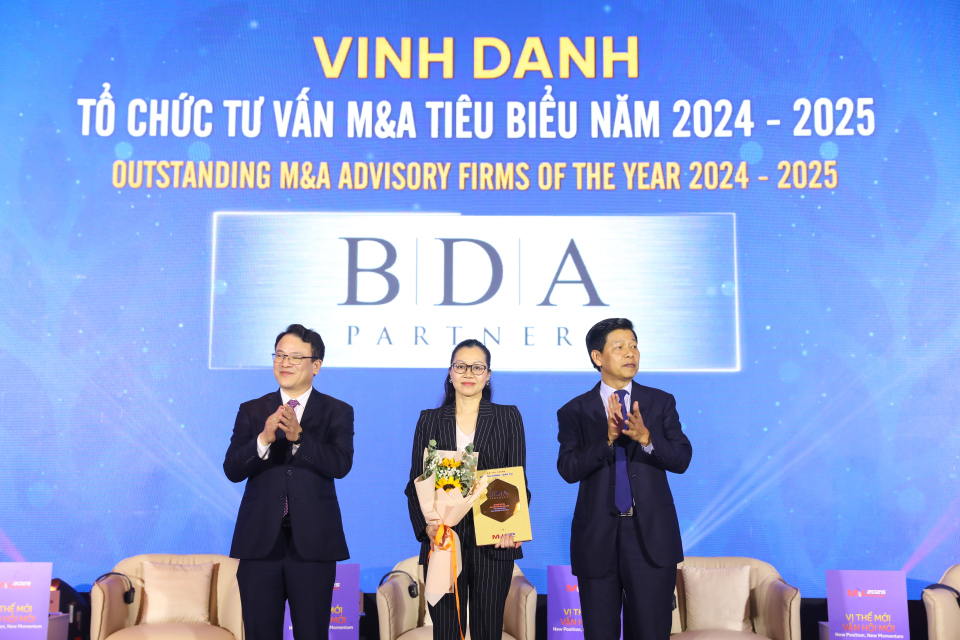
At the recent Vietnam M&A Forum in Ho Chi Minh City, BDA was recognised as The Outstanding M&A Advisor for 2024–2025.
Organized by Vietnam Investment Review (VIR) under the auspices of the Ministry of Finance, the Vietnam M&A Forum has become a prestigious annual event for M&A and investment networking.
This marks BDA’s sixth win in a row, underscoring the strength, agility, and resilience of our Vietnam platform, and the trust of our valued clients.
The 2025 Forum, themed “New Position – New Momentum”, brought together leading domestic and international businesses to celebrate excellence in M&A.
Huong Trinh, Partner and Head of Ho Chi Minh City at BDA Partners, accepted the award on behalf at the ceremony held on December 9th at the JW Marriott Saigon.
Huong Trinh said: “We’re thrilled to share the news that BDA has been named VIR’s Outstanding M&A Advisor for 2024–2025. It’s a remarkable sixth consecutive win. As the market moves forward with renewed vigor, this recognition shines a spotlight on the strength, agility, and resilience of our Vietnam platform. We’re grateful for the unwavering support of our blue chip and fast growing clients. We’re appreciative of our hard working, highly effective team members. We look forward to creating new growth opportunities, and delivering exceptional results, in the year ahead”.
About BDA
BDA Partners is the global investment banking advisor. We are a premium provider of Asia-related advice to sophisticated clients globally, with 30 years’ experience advising on cross-border M&A, capital raising, and financial restructuring. We provide global reach with our teams in New York and London, and true regional depth through our seven Asian offices in Mumbai, Singapore, Ho Chi Minh City, Hong Kong, Shanghai, Seoul and Tokyo. BDA has deep expertise in the Chemicals, Consumer & Retail, Health, Industrials, Services, Sustainability and Technology sectors. We work relentlessly to earn our clients’ trust by delivering insightful advice and outstanding outcomes. BDA Partners has strategic partnerships with William Blair, a premier global investment banking business, and with DBJ (Development Bank of Japan), a Japanese government-owned bank with US$150bn of assets.
US securities transactions are performed by BDA Partners’ affiliate, BDA Advisors Inc, a broker-dealer registered with the Securities and Exchange Commission (SEC). BDA Advisors Inc. is a member of the Financial Industry Regulatory Authority (FINRA) and SIPC. In the UK, BDA Partners is authorized and regulated by the Financial Conduct Authority (FCA). In Hong Kong, BDA Partners (HK) Ltd is licensed and regulated by the Securities & Futures Commission (SFC) to conduct Type 1 and Type 4 regulated activities to professional investors. bdapartners.com