
18 July 2026
BDA discusses the Vietnam Infrastructure Supercycle with DealStreetAsia
For years, Vietnamʼs investment story has revolved around robust domestic consumption, favourable demographics and export-oriented manufacturing. As the country embarks on its most ambitious infrastructure programme in decades, a fourth pillar may be emerging—one that could fundamentally redirect private equity capital over the next decade.
Between 2026 and 2030, Vietnam plans to deploy roughly $310 billion in state capital across flagship projects including the North-South high-speed railway, Long Thanh International Airport, urban metro systems and expressway networks. The countryʼs infrastructure requirements could approach $600 billion by 2040, per various estimates.
While these projects are primarily state-led, investors believe their greatest multiplier effect will be seen in broader private sector opportunities.
The infrastructure push is already changing how industrial developers view Vietnamʼs next phase of growth. Lance Li, CEO of Warburg Pincus-backed BW Industrial, told DealStreetAsia in an interaction that the country is entering “a new industrial growth cycle, and infrastructure is one of its strongest long-term catalysts.”
“Beyond improving connectivity, these investments will lower logistics costs, improve supply chain efficiency and strengthen Vietnamʼs overall competitiveness as a manufacturing destination,” Li said
According to Phuoc Pham, Managing Director at BDA Partners, the infrastructure programme represents the beginning of a multi-decade investment cycle that extends far beyond roads, railways and airports. The buildout is expected to trigger successive waves of corporate growth as new transport corridors reshape manufacturing, logistics and industrial development.
“The State builds the corridor while private capital monetises what moves along it,” said Pham.
Each wave has a natural owner: the first belongs to technology and equipment partners alongside development finance institutions; the second to strategic operators and infrastructure funds in logistics and industrial assets; and the third to private equity funds backing the cash-flow businesses alongside the corridors.
Infrastructure pillar
VinaCapital argues that infrastructure should not be viewed as replacing Vietnamʼs traditional investment strengths but rather reinforcing them.
“Vietnamʼs growth drivers have traditionally rested on consumption, demographics, and manufacturing cost advantages. Infrastructure is now becoming a genuine fourth pillar—not replacing the old thesis but reinforcing and extending it,” said Khanh Vu, Portfolio Manager of VinaCapital Vietnam Opportunity Fund (VOF).
VinaCapital has been investing in several of these “home-grown” opportunities, including Gelex Infrastructure.
“Gelex Infrastructureʼs business includes large-scale infrastructure projects such as airports, energy and industrial parks, and we believe that they will grow to become one of the leading infrastructure companies in the country, an example of a national champion that the government is so keen on developing,” Vu added.
Pham of BDA Partners frames the infrastructure opportunity through three complementary themes.
First, the emergence of investable infrastructure assets capable of generating long-duration contracted cash flows. Second, large domestic conglomerates leading projects, and third is the beneficiary economy thesis where businesses benefit from improved infrastructure, particularly industrial, logistics, energy and digital infrastructure.
Following second-order winners
For many private equity firms, the most attractive opportunities may lie not with infrastructure ownership itself but with the companies whose economics improve riding on the infrastructure.
“We have made significant investments into companies like these over the last 12 months,” said Vu of VOF. “This is where we see the more compelling opportunity for investors; specifically, improved connectivity effectively unlocks new supply of investable, competitively positioned assets that did not necessarily function as attractive infrastructure plays before.
BW Industrial is already seeing that shift in tenant demand. According to Li, manufacturers are no longer selecting sites primarily based on labour availability or proximity to ports.
“Going forward, competitive advantage will come from connectivity, power reliability, and a well-developed operating ecosystem, rather than land availability alone,” he said.
Attractiveness to global investors
BDA Partners identifies industrial and logistics ecosystems as the strongest areas for private equity deployment.
Industrial and logistics ecosystems are the most vibrant segments in the market, spanning real estate (industrial parks, factories, warehousing, airports, seaports and logistics centers) and the utilities and services running through it (power, water, waste, 3PL, cold chain, last-mile, freight forwarding, aviation, shipping). Global sponsors have already validated the model at scale.
Pham of BDA Partners also identified power and digital infrastructure, and local conglomerates as two other areas that offer compelling returns through more nuanced pathways. Actisʼs Levanta platform recently added an operating Vietnamese wind asset to its regional portfolio, while local conglomerates stay on the radar of large funds seeking diversified exposure.
“KKR, Stonepeak, EQT and TPG have raised or are raising dedicated Asia-Pacific infrastructure vehicles, with Vietnam squarely inside their mandates. The question for the next multi-million (or multi-billion) PEled infrastructure deal is simply how quickly an opportunity arises,” Pham added.
Recent infra deals in Vietnam by investment funds
| Year | Investor(s) | Target | Sector | Transaction details |
| 2023 | Actis | An Phat 1 Industrial Park JV | Industrial infrastructure | Exited |
| 2023 | KV Asia Capital | Bee Logistics | Freight forwarding & logistics | KV Asia Capital invested in Bee Logistics |
| 2025 | VinaCapital Opportunities Fund (VOF) | Gelex Infrastructure | Energy, industrial parks, infrastructure | VOF was the only institutional investor to obtain a meaningful pre-IPO investment allocation in Gelex Infrastructure alongside company management. In February, the company listed on the Ho Chi Minh Stock Exchange with the ticker “GEL |
| 2025 | Ares Management | SLP (from GLP) | Logistics real estate | Acquired GLP’s Southeast Asia logistics platform, including Vietnam assets |
| 2025 | A.P. Moller Capital in partnership with Vina Capital | ALS Air Cargo Terminal | Air cargologistics | Strategic investment and partnership through second institutional fund, A.P. Moller Capital – Emerging Markets Infrastructure Fund II |
| 2026 | Levanta Renewables, Actisʼ pan-Southeast Asia renewable energy platform. | Wind project in Gia Lai Province, Vietnam. | Renewable energy | Acquired an 80% stake in a fully operational 50 MW onshore wind project in Gia Lai Province |
| 2026 | Undisclosed | BW Industrial | Industrial & logistics real estate | A $120 million partnership with a top global institutional investor to develop a portfolio of high-quality industrial projects across major industrial zones. |
| 2026 | Cool Japan Fund | CLK COLD STORAGE CO | Frozen warehouses in Vietnam | Exited. Cool Japan Fund, transferred all of its shares of CLK COLD STORAGE to Japan Logistic Systems Corp. and Kawasaki Kisen Kaisha |
Beyond industrial parks
The opportunity set may continue expanding as Vietnam moves further up the manufacturing value chain.
Recent investments by semiconductor manufacturers, chip designers and AI companies suggest that transition may already be underway. BDA Partners believes supply chains supporting semiconductor packaging, advanced manufacturing, technology-enabled logistics and workforce development could become increasingly attractive targets for private capital.
BW is already seeing demand shift toward these sectors.
“High-value-added industries account for nearly half of BWʼs total ready-built factory leased area, with the electronics sector representing the biggest tenant group. We also continue to see strong leasing demand from global manufacturers expanding or diversifying their operations into Vietnam,” Li said.
The larger question for private equity is therefore no longer whether Vietnamʼs infrastructure programme will generate investment opportunities but where those opportunities will appear first.
“Private capital may come in the businesses riding the value-added manufacturing upgrade rather than waiting for it to complete. Chip testing and packaging supply chains, workforce and education platforms, and tech-enabled logistics serving time-sensitive, high-value cargo should belong on fundsʼ radar,” Pham of BDA Partners added.
About BDA Partners
BDA Partners is the global investment banking advisor. We’re a premium provider of advice to sophisticated clients globally, with 30 years’ experience advising on cross-border M&A, capital raising and financial restructuring. We provide global reach with our teams in New York and London, and true regional depth through our Asian offices in Mumbai, Singapore, Ho Chi Minh City, Hong Kong, Shanghai, Seoul and Tokyo. BDA has expertise in the Chemicals, Consumer & Retail, Health, Industrials, Services, Sustainability and Technology sectors. We work relentlessly to earn clients’ trust by delivering insightful advice and outstanding outcomes. BDA Partners has strategic partnerships with William Blair, a premier global investment banking business, and with DBJ, Development Bank of Japan, a Japanese government-owned bank with US$150bn of assets.
US securities transactions are performed by BDA Partners’ affiliate, BDA Advisors Inc, a broker-dealer registered with the SEC. BDA Advisors Inc is a member of FINRA and SIPC. In the UK, BDA Partners is authorised and regulated by the FCA. In Hong Kong, BDA Partners (HK) Ltd is licensed and regulated by the SFC to conduct Type 1 and Type 4 regulated activities to professional investors. bdapartners.com

Latest insights

1 October 2026
BDA Private Equity Conference 2026
Conrad Hong Kong | 28–29 October This October, we will host the 8th BDA...

19 August 2026
BDA’s Jeff Acton quoted in Bloomberg on emerging bidding wars in Japan’s...
A new trend is emerging in Japan’s busy M&A market, a place that’s...

24 July 2026
Consumer sector deals now boast sharper intent – BDA Partners analysis...
Vietnam’s consumer sector remains one of the first places investors look...
22 May 2026
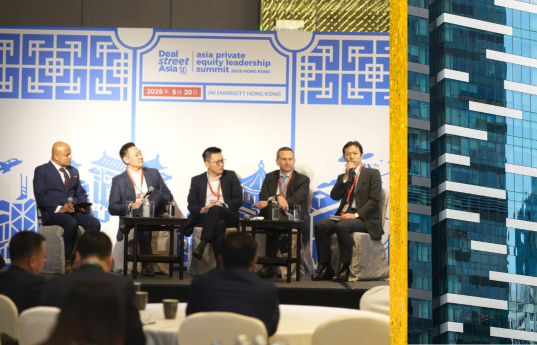
Paul DiGiacomo speaks at DealStreetAsia conference in Hong Kong
DealStreetAsia featured Paul DiGiacomo, Managing Partner at BDA Partners,...